

In This Article
 Facts Checked
Black Spots on Skin: Causes, Types & How to Get Rid of Them (Complete 2026 Guide)


Dark spots affect over 90% of people at some point in their lives. Here’s everything you need to know — from the exact reason they form to the treatments that actually work, including options for Indian skin tones.
In This Article
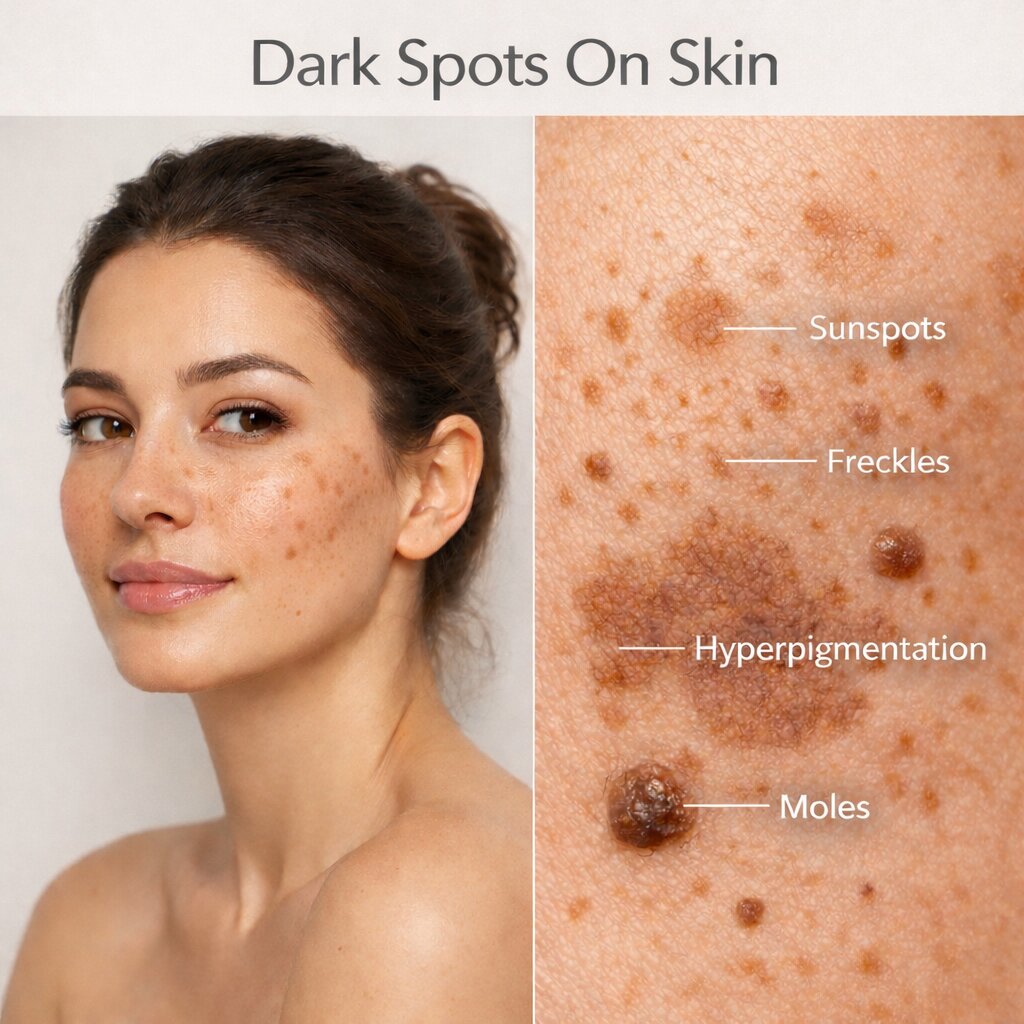
What Are Black Spots on Skin?
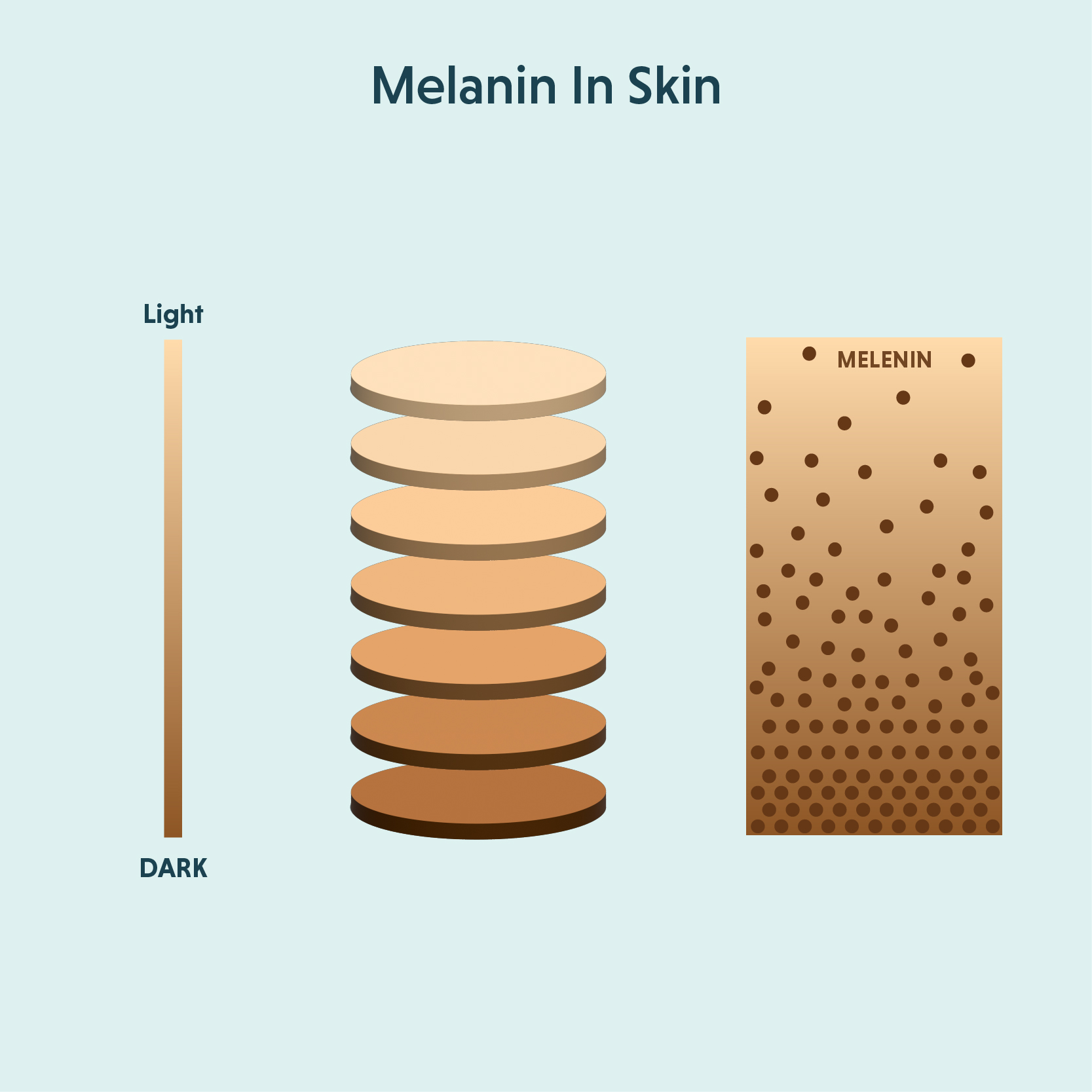
Your skin gets its colour from a pigment called melanin, which is produced by specialised skin cells known as melanocytes. When these cells go into overdrive — triggered by UV radiation, inflammation, or hormonal signals — they deposit extra melanin in specific areas, creating spots that appear darker than your natural skin tone.
The clinical term for this is hyperpigmentation. It is one of the most common skin complaints worldwide, and particularly prevalent in South Asian countries including India, where higher baseline melanin levels combined with intense sun exposure throughout the year make the skin more reactive to pigmentation triggers.
The good news: in the vast majority of cases, black or dark spots are completely benign. They do not hurt, do not indicate disease, and many will fade on their own with the right care. The challenging part is patience — most treatments take weeks to months to show visible results.
Common Causes of Black Spots on Skin
Not all dark spots are created equal. The cause shapes the treatment approach, so identifying the trigger is the first and most important step. Here are the six most common causes dermatologists encounter:
CAUSE 01 : Sun & UV damage
UV rays stimulate melanocytes to produce protective melanin. Repeated sun exposure without SPF concentrates this melanin into flat, defined spots — commonly called sunspots or age spots.
CAUSE 02: Post-acne marks (PIH)
Post-inflammatory hyperpigmentation (PIH) is the dark mark left after a pimple heals. The inflammation triggers melanin deposits that persist for weeks to months — more pronounced on darker skin tones.
CAUSE 03: Melasma (hormonal)
Hormonal fluctuations — during pregnancy, from contraceptive pills, or PCOS — cause melasma: brown or grey-brown patches, typically on the cheeks, forehead, and upper lip.
CAUSE 04: Ageing spots
Also called liver spots or senile lentigines, these flat brown spots appear from the 40s onward on sun-exposed areas — face, hands, and décolletage — due to accumulated UV exposure over decades.
CAUSE 05: Medication side effects
Certain drugs — tetracyclines, antimalarials, chemotherapy agents, and even some NSAIDs — can trigger drug-induced hyperpigmentation as a side effect. Always check with your doctor.
CAUSE 06: Underlying conditions
Conditions like type 2 diabetes (acanthosis nigricans), thyroid dysfunction, and vitamin B12 deficiency — common in vegetarian Indian diets — can all manifest as skin darkening or spots.
Types of Black Spots on Skin: Know the Difference
Different types of dark spots have distinct appearances, locations, and causes. Correctly identifying which type you have will save you months of using the wrong products.
| Type | Appearance | Common location | Main cause | Fades on its own? |
| Freckles (ephelides) | Small, flat, light-brown dots | Face, shoulders | Genetics + UV exposure | Partially (in winter) |
| Post-acne marks (PIH) | Flat, brown or red-brown patches | Face, back, chest | Acne inflammation | Yes, in 3–24 months |
| Melasma | Large, symmetrical grey-brown patches | Cheeks, forehead, lip | Hormones + UV | Rarely without treatment |
| Age spots / sunspots | Flat, well-defined dark spots | Face, hands, arms | Cumulative UV damage | No |
| Moles (nevi) | Raised or flat, consistent colour | Anywhere on body | Melanocyte clusters | No (monitor for changes) |
| Acanthosis nigricans | Dark, velvety patches | Neck, armpits, groin | Insulin resistance / diabetes | Requires treating cause |
How to Remove Black Spots on Skin?
There is no single “best” treatment for all black spots — the right approach depends on the type, depth of pigmentation, and your skin tone. Here is a clear breakdown from least to most intensive:
1. Topical Skincare
Consistent use of depigmenting actives applied directly to the skin is the safest, most accessible first step. Most people see significant improvement in 8–12 weeks with evidence-backed ingredients (detailed in the next section). The key is combining a depigmenting active with daily SPF — UV exposure undoes progress extremely quickly.
2. Chemical Exfoliants
Alpha hydroxy acids (AHAs) like glycolic and lactic acid, along with beta hydroxy acids (BHAs) like salicylic acid, accelerate the skin’s natural cell turnover — helping carry pigmented cells to the surface and off the skin faster. They also improve the penetration of other depigmenting actives. Start at low concentrations (5–10% AHA) to avoid triggering more PIH, which is a real risk on darker Indian skin tones.
3. Prescription-Strength Treatments
For stubborn melasma or deep PIH that doesn’t respond to over-the-counter products, a dermatologist may prescribe hydroquinone 2–4% (the gold standard for hyperpigmentation, used in 3-month cycles), tretinoin (a vitamin A derivative that speeds cell turnover), or a combination cream such as a hydroquinone + tretinoin + mild steroid (triple combination therapy). These are powerful and require professional supervision.
4. In-Clinic Dermatological Procedures
For deep or treatment-resistant pigmentation, professional procedures offer faster results:
Chemical peels (glycolic, TCA, Jessner’s) — removes top layers of pigmented skin; very effective for PIH and sun damage.
Laser treatments (Q-switched Nd:YAG, fractional laser) — targets melanin directly with light energy; requires a trained specialist for darker skin tones to avoid paradoxical darkening.
Microdermabrasion — mechanical exfoliation; milder option suitable for superficial pigmentation.
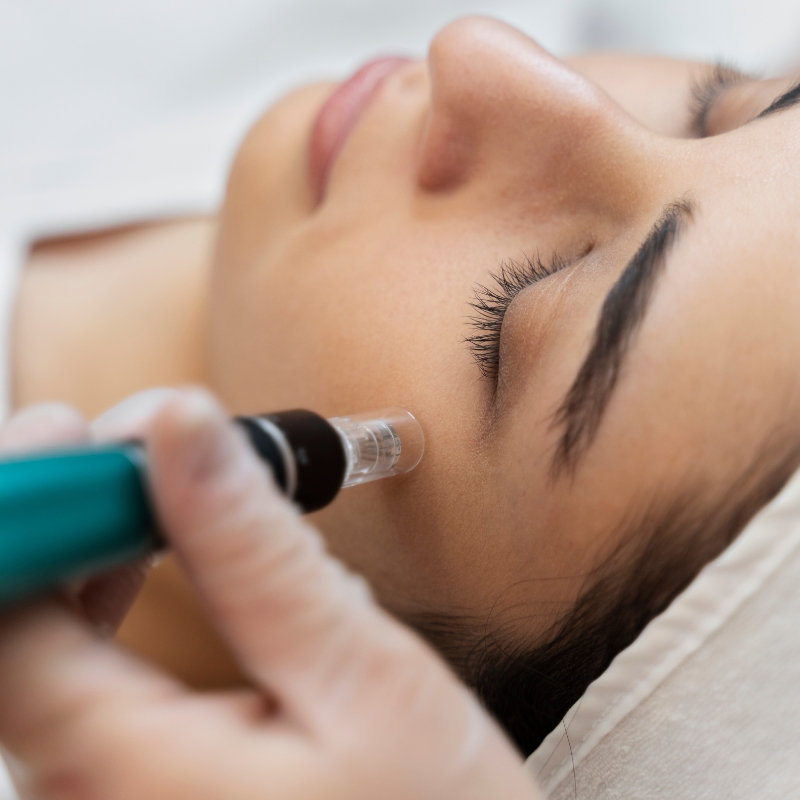
Microneedling with vitamin C — channels actives deeper into the skin while triggering collagen for overall tone improvement.
IMPORTANT CAUTION:
Laser and chemical peel treatments for darker skin (Fitzpatrick IV–VI) carry a higher risk of post-procedure hyperpigmentation if performed aggressively or without proper pre-treatment. Always consult a board-certified dermatologist experienced with brown or dark skin tones before undergoing any in-clinic procedure.
Home Remedies for Black Spots on Skin
Many traditional Indian home remedies have genuine scientific backing for mild pigmentation. They won’t work as fast as actives-based skincare, but they are safe, affordable, and effective for maintenance and mild cases.
1. Turmeric and honey mask — Curcumin in turmeric inhibits tyrosinase, the enzyme that produces melanin. Mix a pinch of turmeric with a teaspoon of raw honey. Apply for 15 minutes. Rinse thoroughly. Use 2–3 times a week. Note: use raw turmeric sparingly — it can stain fair skin yellow temporarily.
2. Aloe vera gel — Aloin, a compound in aloe, has demonstrated depigmenting properties in peer-reviewed studies. Apply fresh aloe gel directly to dark spots overnight. Safe for daily use and all skin tones.
3. Sandalwood (chandan) paste — A well-known Ayurvedic remedy, sandalwood has mild skin-brightening properties. Mix pure sandalwood powder with rose water and apply as a paste. Do not use synthetic sandalwood oil — it can irritate.
4. Gram flour (besan) and milk paste — A traditional Indian exfoliating mask. Besan gently removes dead skin cells while milk’s lactic acid brightens. Mix to a paste consistency, apply, allow to dry, and rub off gently in circular motions.
5. Vitamin C from kitchen staples — Lemon juice contains vitamin C and citric acid but should be used with extreme caution — undiluted citrus juice on skin can cause photosensitive burns (phytophotodermatitis), making pigmentation significantly worse. If you must use it, dilute heavily and never go into the sun afterward.
NOTE:
Home remedies work best as a complement to — not a replacement for — proper skincare and sun protection. Give any remedy at least 6–8 weeks of consistent use before assessing results.
Skincare Ingredients That Work for Dark Spots
The skincare market is flooded with “brightening” products. Here are the ingredients that have genuine clinical evidence behind them — and what they actually do:
- Niacinamide (Vitamin B3) — 5–10%
Prevents melanin transfer from melanocytes to skin cells, visibly reducing dark spots with regular use. Also strengthens the skin barrier and reduces redness. One of the best-tolerated actives for all skin tones. Widely available in India (Minimalist 10% Niacinamide serum is a popular, affordable choice). - Vitamin C (L-ascorbic acid) — 10–20%
A powerful antioxidant that inhibits the tyrosinase enzyme, directly reducing melanin production. Also provides photoprotection when layered under SPF. Use a stabilised form (look for ascorbyl glucoside or ethyl ascorbic acid if pure L-ascorbic acid is too irritating). Apply in the morning. - Alpha Arbutin — 1–2%
A gentler, more stable cousin of hydroquinone. Inhibits tyrosinase with lower irritation risk. Excellent for targeting PIH on brown and dark skin tones where hydroquinone may be too harsh.+ - Kojic Acid — 1–4%
Derived from fungi, kojic acid inhibits melanin formation and is particularly effective against age spots and sun-induced pigmentation. Can be sensitising for some — start with lower concentrations. - Azelaic Acid — 10–20%
Uniquely effective for PIH because it selectively inhibits overactive melanocytes without affecting normal ones. Also treats acne (the root cause of PIH). Available OTC at 10% in India; prescription-strength 15–20% is available from dermatologists. - Retinoids (Retinol / Tretinoin)
Accelerate cell turnover, pushing pigmented cells to the surface faster. Tretinoin (prescription) is the most effective; over-the-counter retinol is milder. Start low (0.025% tretinoin or 0.1% retinol), use only at night, and always pair with SPF the next morning. Can cause initial purging and dryness. - SPF 30–50+ Sunscreen
Not a treatment ingredient per se, but the single most important step in any dark spot routine. UV exposure is the primary driver of hyperpigmentation, and it actively darkens spots you’re trying to fade. Without daily sunscreen, every other ingredient you use will be significantly less effective. Use a broad-spectrum SPF every single morning, reapplied every 2–3 hours in direct sun.
How to Prevent Black Spots on Skin?
Prevention is significantly easier than treatment. Once you’ve cleared existing dark spots, these habits will stop new ones from forming:
- Apply broad-spectrum SPF 30+ sunscreen every morning, regardless of whether you’ll be outdoors. UVA rays penetrate glass and cause pigmentation even indoors.
- Reapply sunscreen every 2–3 hours when in direct sunlight. In India’s summer months (April–June), this is especially critical.
- Do not pick at pimples, scabs, or skin irritations — the resulting inflammation triggers PIH, the dark mark that follows inflammation.
- Treat acne promptly and effectively to minimise inflammation and subsequent PIH.
- Eat a diet rich in antioxidants: vitamin C (citrus, amla/Indian gooseberry), vitamin E (nuts, seeds), and polyphenols (green tea). These reduce the oxidative stress that activates melanin production.
- Check if any current medication you take lists hyperpigmentation as a side effect — speak with your doctor if so.
- If you have diabetes or suspect a hormonal imbalance, getting it managed medically will also help reduce associated skin darkening.
- Supplement vitamin B12 if you follow a vegetarian or vegan diet — deficiency is a surprisingly common, often overlooked cause of hyperpigmentation in India.
When to See a Dermatologist?
The overwhelming majority of dark spots are harmless. However, certain features demand urgent professional evaluation. Use the ABCDE rule to assess any spot that concerns you:
One half doesn’t match the other
Irregular, ragged, or blurred edges
Multiple colours or uneven shading
Larger than 6mm (pencil eraser)
Any change in size, shape, or colour over weeks
See a dermatologist promptly if: a spot bleeds without injury, appears very suddenly and grows fast, feels itchy or painful, or if you have a personal or family history of skin cancer. Early detection of melanoma — the most serious form of skin cancer — dramatically improves outcomes.
You should also consult a dermatologist if over-the-counter treatments haven’t produced improvement after 3–4 months of consistent use, or if you suspect your pigmentation is hormonally driven (melasma). A professional can tailor a prescription regimen and perform in-clinic treatments that are not accessible over the counter.
Takeaway
Black spots on skin are one of the most common, most treated, and most misunderstood skin concerns — especially in India, where high UV exposure, darker skin tones, and common nutrient deficiencies create a perfect storm for hyperpigmentation.
The most important things to remember: identify the type of dark spot you have, protect religiously against the sun (no SPF = no progress), choose evidence-backed actives (niacinamide, vitamin C, alpha arbutin) rather than chasing trendy ingredients, and be consistent and patient — skin renews itself approximately every 28 days, so real change takes time.
If home care hasn’t helped after 3–4 months, or if anything about a spot worries you — shape, speed of change, bleeding — book an appointment with a board-certified dermatologist. Good skin health is a long game, and knowing when to seek professional help is part of playing it well.
DISCLAIMER:
This article is for informational purposes only and does not constitute medical advice, diagnosis, or treatment. Always consult a qualified dermatologist or healthcare professional before starting any new skincare treatment, particularly for prescription-strength products or in-clinic procedures. Reviewed by Dr. Priya Sharma, MD Dermatology, March 2026.
REFERENCES:
American Academy of Dermatology (AAD) — hyperpigmentation guidelines; Journal of the European Academy of Dermatology and Venereology — niacinamide clinical trials; Indian Journal of Dermatology, Venereology and Leprology — pigmentary disorders in South Asian populations; National Institutes of Health (NIH) — vitamin B12 deficiency and cutaneous manifestations.
Frequently Asked Questions On Black Spots On Face
Sudden black spots most commonly result from an acute trigger: a burst of intense sun exposure (holiday or outdoor event), a new pimple or skin injury causing PIH, a hormonal shift (start of a contraceptive pill, pregnancy), or a new medication. In rare cases, a rapidly appearing dark spot warrants dermatologist evaluation to rule out melanoma.
Timeline depends on the cause and depth. Superficial post-acne marks may fade in 3–6 months with consistent use of niacinamide and SPF. Deeper sun-induced or hormonal pigmentation (melasma) can take 6–18 months of treatment. The single biggest factor that delays fading is inconsistent or absent sunscreen use — UV exposure reactivates pigmentation every time.
Vitamin B12 deficiency is the most common nutrient deficiency linked to hyperpigmentation, especially in India where vegetarian and vegan diets are widespread. It can cause diffuse darkening of the skin and nail beds. Vitamin D deficiency and low folate can also contribute to uneven skin tone. A simple blood test can confirm deficiency levels.
Evidence-backed OTC options widely available in India include Minimalist 10% Niacinamide serum, Dot & Key Vitamin C + E serum, and The Derma Co 15% Vitamin C serum. For stubborn pigmentation, a dermatologist may prescribe a combination cream containing hydroquinone (2–4%), tretinoin, and a mild corticosteroid. Always patch test new products, especially on darker Indian skin tones.
The vast majority of black spots are completely benign. Melanoma — the dangerous skin cancer — can appear as a dark spot, but it has specific warning signs: asymmetry, irregular borders, uneven colour, diameter over 6mm, or rapid evolution. If a spot ticks any of these ABCDE criteria, or bleeds and grows fast, see a dermatologist. Don’t self-diagnose cancer from a common dark spot.
Yes — niacinamide has solid clinical evidence for reducing hyperpigmentation. It works by inhibiting the transfer of melanin granules (melanosomes) from melanocytes to skin cells. Studies show that 5% niacinamide used for 8 weeks significantly reduces dark spot intensity and improves overall skin tone. It is well tolerated even on sensitive and dark skin tones, making it one of the best first-choice actives for Indian skin.
Many dark spots can be significantly lightened or made near-invisible with treatment, but “permanent removal” depends on the type. Sunspots treated with laser can be removed effectively. Post-acne PIH fades on its own with time. Melasma, however, is chronic and tends to recur — especially with sun exposure or hormonal changes — so ongoing maintenance (daily SPF, periodic actives use) is needed long-term.
Yes. Dark, velvety patches on the neck, armpits, or inner thighs — known as acanthosis nigricans — are strongly associated with insulin resistance and type 2 diabetes. If you notice this type of darkening (thick, rough-textured, not flat like a typical dark spot), consult a doctor for blood sugar testing rather than treating it with skincare alone.