
 Laser Hair Reduction
 Hair Re-Growth
 Acne / Scar
 Skin Rejuvenation
 Insta Glow Solutions
 Pigmentation
 Anti-Aging
 More
More Body
Body
In This Article
 Facts Checked
How to Control Oil on Face: Effective Tips for Oily Skin Care


Does your face turn shiny just a few hours after you cleanse it? You are not alone. Excess oil on the face is one of the most common concerns for people with oily skin. While oil helps keep your skin healthy, excess oil can clog pores and cause breakouts. What is the solution? Do not worry. It is not as complicated as you think. In this article, we will discuss everything about how to control oil on the face. We will also look into what causes it and offer some useful tips for managing this condition. Let us get started.
In This Article
What Causes Oily Skin?
Several factors contribute to sebum overproduction. Understanding the causes of oily skin is crucial to building the right routine. Let us look at what makes your face get so oily:
- Genetics: Your genes can be a cause for excess sebum production. If any of your family members have oily skin, you are more likely to have oily skin too.
- Hormones: Your hormones can be a contributing factor to the overproduction of sebum. Hormonal fluctuations during puberty, menstrual cycle, pregnancy and menopause can trigger excess oil production.
- Climate: Hot weather and a humid climate stimulate your oil glands to produce more oil.
- Age: Oil production in individuals peaks during certain years and decreases in other years. Sebum spikes during puberty and young adulthood in both men and women.
- Diet: What you eat can have a significant impact on sebum production. Foods with a high glycemic index, dairy products, and unhealthy fats can raise insulin levels and trigger hormonal changes, which stimulate the sebaceous glands to produce more oil.
- Stress: Stress is yet another contributing factor to excess oil production. Stress increases cortisol and androgen levels, which lead to increased oil production in your skin.
- Skincare Habits: Certain habits, such as overwashing your face, using harsh or incorrect products, or skipping moisturising, can cause your skin to overproduce sebum.
What Are The Symptoms Of Oily Skin?
Do you want to know if you have oily skin? Look for the following symptoms to determine if your skin is oily or not:
- If you have a shiny or greasy appearance
- If your pores appear large or obvious
- If you have clogged pores and notice blackheads
- If you have persistent pimples
What Is The Skincare Routine For Oily Skin?
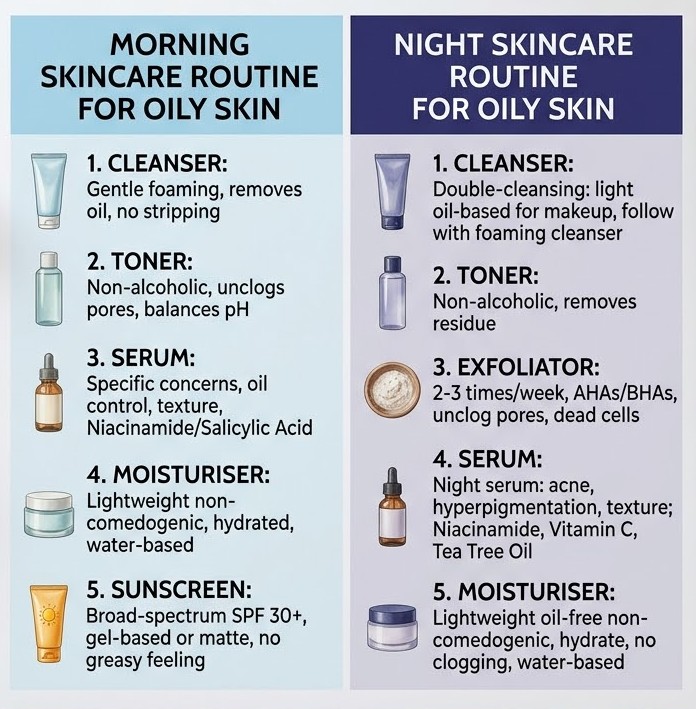
You need a minimalist skincare routine for oily skin that helps control oil production. Too many steps or too many products can compromise the skin barrier, causing clogged pores and breakouts. Here is a simple step-by-step skincare routine for oily skin:
Morning Skincare Routine For Oily Skin:
- Cleanser: Cleanse your face in the morning using a gentle foaming cleanser that removes oil buildup overnight without stripping your skin of its natural oils.
- Toner: Use a non-alcoholic toner for your face that unclogs the pores and balances the skin’s pH.
- Serum: Use a serum that targets specific skin concerns, helps control oil production, and improves skin texture. Make sure the serum contains niacinamide or salicylic acid.
- Moisturiser: Apply a lightweight non-comedogenic moisturiser that keeps your skin hydrated without adding extra oil. Preferably, use a water-based moisturiser.
- Sunscreen: Apply a broad-spectrum SPF 30+, which is either gel-based or matte-finish sunscreen, to protect your skin without leaving a greasy feeling.
Night Skincare Routine For Oily Skin:
- Cleanser: At night, follow a double-cleansing method. Use a light oil-based cleanser to remove makeup and sunscreen buildup from the skin. Follow it with a foaming cleanser that thoroughly cleanses your skin and cleans the pores.
- Toner: Reapply your non-alcoholic toner to remove all the residue on your face.
- Exfoliator: Exfoliate your skin 2-3 times a week using AHAs or BHAs to unclog pores and remove dead skin cells.
- Serum: Use a night serum that addresses concerns like acne, hyperpigmentation or uneven skin texture. Look for ingredients like niacinamide, vitamin C or tea tree oil.
- Moisturiser: Apply a lightweight, oil-free, non-comedogenic moisturiser to hydrate your skin and prevent clogging of pores. Preferably, use a water-based moisturiser.
What Are The Tips to Reduce Oily Skin?
You may be religiously following an AM and PM skincare routine for oily skin. However, there are certain things you need to be mindful of. Here are some useful tips that will help prevent excess oil on your skin.
- Make sure you are picking the right products for your skin type. Look for oil-free and water-based products. Opt for an alcohol-free cleanser.
- Moisturising is a crucial step in your morning and night skincare routine. Even if you have oily skin, you should never skip a moisturiser.
- Never go to sleep without removing makeup. Sleeping while wearing makeup leads to blackheads and acne. It may even damage your skin.
- Always wash your face at least twice a day, in the morning and at night, after workouts, swimming, or any strenuous activity that makes you sweat.
- Sunscreen is non-negotiable to protect your skin from sun damage. Always wear a broad-spectrum SPF 30+ when stepping out and use a hat, scarf or umbrella to shield your face.
- Do not over-exfoliate or over-scrub your skin, as it can strip your skin of its natural oils.
- Use satin or silk pillow covers, as they do not absorb natural oils, creams, or serums.
- Make certain dietary changes to control sebum production. Reduce consumption of dairy products, refined sugar, and processed foods. Increase intake of foods rich in Omega-3 fatty acids, fruits, and vegetables.
Takeaway
Oily skin is a common condition that can be caused by several factors, including genetics, hormonal imbalance, diet, ageing, stress, and climate. Following a regular skincare routine with the right products can help control oil on the face. The simple skincare regimen outlined in this article, along with tips to prevent oily skin, will help you better manage your skin. If you still have concerns despite trying these or want a personalised skincare routine with the best products, book a consultation with our expert dermatologists at Oliva. They will analyse your skin condition and recommend a customised routine that is designed just for you.
Frequently Asked Questions On How To control Oil On Face
It is not possible to completely stop oily skin. However, with regular cleansing, using the right oil-free products, and dermatologist-recommended treatments, we can control excess oil.
Regular consumption of daily products, processed foods, refined sugars and carbs, and fried items may increase oil production and trigger breakouts.
Avoid sugary foods, refined carbs, processed snacks, and high-glycemic foods, as they can worsen oiliness and acne.
Not really. However, in some people, milk can trigger oil production and acne due to hormonal effects, though this varies from person to person.
Clay or charcoal masks are best for people with oily skin, as they help absorb excess oil, unclog pores, and keep the skin matte.