
In This Article
 Facts Checked
Top 10 Myths and Facts About Acne Scar Treatment


Acne scars are a common skin concern, but misinformation often leads to delayed or ineffective acne scar treatment. Many people believe myths about acne scar removal, causing confusion about what truly works. Dermatologist-recommended treatments offer safe and effective solutions for different types of acne scars.This guide explains the most common myths and facts about acne scar treatment to help you make informed decisions.
In This Article
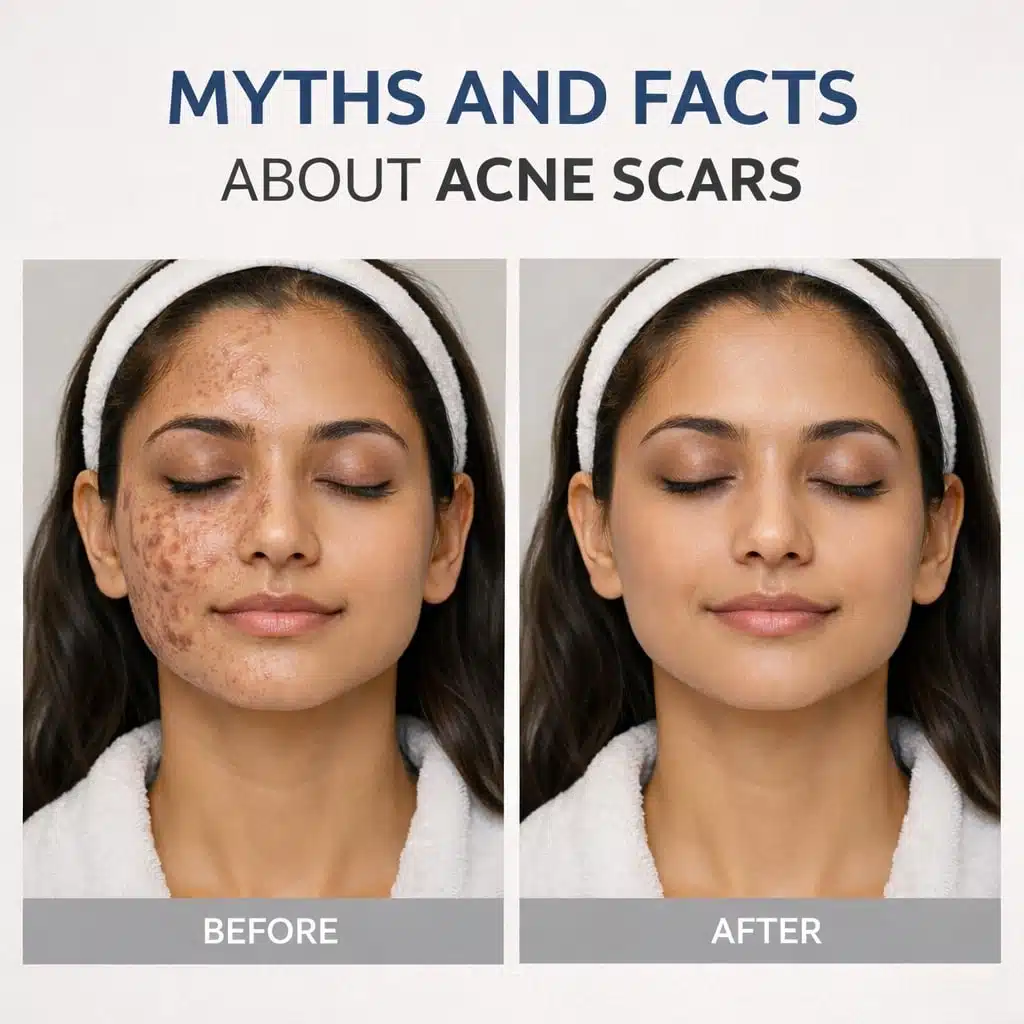
Top 10 Myths and Facts About Acne Scar Treatment
Acne scar treatment is often surrounded by misinformation, making it difficult to know what truly works. Understanding the facts helps you choose safe, effective, and dermatologist-approved solutions.
1. Myth: Acne scars will fade completely on their own
Fact: Most acne scars, especially deep or pitted scars, do not fade naturally. Clinical treatments such as laser therapy, microneedling, subcision, or chemical peels are often required for visible improvement.
2. Myth: Home remedies can permanently remove acne scars
Fact: Home remedies may improve skin texture temporarily but cannot repair deep scar tissue. Dermatologist-guided treatments are required for long-term scar reduction.
3. Myth: Acne scar treatment is painful
Fact: Modern Best Pimple scar treatments use topical anesthesia and advanced devices, making procedures well-tolerated with minimal discomfort.
4. Myth: One treatment session is enough to remove acne scars
Fact: Acne scar correction is a gradual process. Most patients need multiple sessions, depending on scar type, severity, and skin response.
5. Myth: All acne scars can be treated the same way
Fact: Different scars—ice-pick, boxcar, rolling, or hypertrophic scars—require customized treatment plans for optimal results.
6. Myth: Acne scar treatments are unsafe for Indian skin
Fact: When performed by experienced dermatologists using US-FDA-approved equipment, acne scar treatments are safe for Indian and darker skin tones.
7. Myth: Acne scar treatment gives instant results
Fact: Visible improvement happens gradually over weeks to months as collagen production increases and skin regenerates.
8. Myth: Laser treatment thins the skin permanently
Fact: Advanced laser treatments stimulate collagen, making skin stronger and smoother, not thinner.
9. Myth: Acne scar treatments cause permanent redness or pigmentation
Fact: Temporary redness may occur, but with proper post-procedure care, pigmentation risks are minimal and manageable.
10. Myth: Acne scar treatment is only cosmetic
Fact: Acne scars can affect self-confidence and mental well-being. Treating scars improves skin health, texture, and quality of life.
Key Takeaway
Pimple scar treatment is safe, effective, and personalized when done by qualified dermatologists. Myths often prevent people from seeking timely care, but clinically proven treatments offer long-term improvement, not just cosmetic enhancement.
Frequently Asked Questions On Myths & Facts About Acne Scar Treatment
Most acne scars can be significantly improved, but complete removal depends on scar type, depth, and skin response. Dermatological treatments offer visible, long-term improvement.
There is no single best treatment. Laser therapy, microneedling, subcision, chemical peels, or combination treatments are chosen based on the scar type and skin condition.
Yes. When performed by experienced dermatologists using US-FDA approved technology, acne scar treatments are safe and effective for Indian skin tones.
Most patients need 3 to 6 sessions, depending on the severity of scars, treatment method, and individual healing response.
Procedures are generally well-tolerated with topical anesthesia. Mild redness or swelling may occur, with minimal downtime in most cases.
Home remedies may help with mild pigmentation but cannot repair deep acne scars. Clinical treatments are required for structural scar correction.
Initial improvement may be seen within a few weeks, while optimal results develop gradually over 2–3 months as collagen rebuilds.
No. Treating acne scars can improve skin health, texture, confidence, and overall quality of life.