


In This Article
 Facts Checked
Everything You Need to Know: Vitamin C Benefits for Skin (2026)


Did you know what vitamin C can do for your skin? Vitamin C is a popular skincare ingredient, often recommended by dermatologists. Known for its antioxidant properties, vitamin C helps combat free radicals. It also helps reduce the appearance of wrinkles, dark spots, and acne. Whether you are a beginner just getting started with topical vitamin C or a seasoned user, you should understand the importance of vitamin C for skin health. In this article, we will take you through the vitamin C benefits for skin and the best way to use it. Let us get started. Before we dive in, let us learn what vitamin C is and how it works for your skin.
In This Article
What Is Vitamin C & How Does It Work For Skin?
Vitamin C is an essential water-soluble vitamin found in several foods, such as citrus, berries, and vegetables. Also known as L-ascorbic acid, it is a powerful antioxidant that helps fight against free radical damage and in the synthesis of collagen. It is a powerful skincare ingredient that can help brighten your skin, even out your skin tone, and reduce signs of ageing. Let us learn more about the benefits of vitamin C for skin in the section below.
What Are The Top Benefits of Vitamin C For Skin?
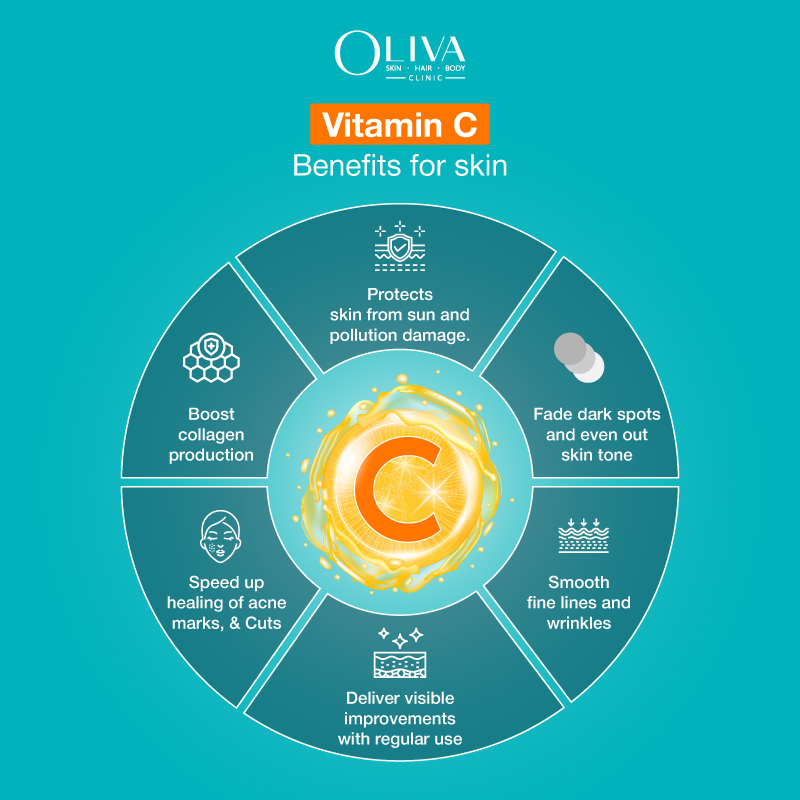
Now that you have the answer to the question, “Is vitamin C good for skin?”, let us now learn about the vitamin C uses for skin. Here is a breakdown of the several vitamin C benefits for skin.
-
Fades dark spots and evens out skin tone
Regular application of vitamin C can help reduce melanin production. This further helps lighten the dark spots or patches on your skin and gives you an even skin tone.
-
Boosts collagen production
Known for its antioxidant properties, topical vitamin C products can help stimulate collagen production. This keeps your skin from sagging.
-
Protects skin from sun and pollution
When you apply a vitamin C skincare product, it helps protect your skin from the damage caused by UV exposure and pollution.
-
Smooths fine lines and wrinkles
Vitamin C helps reduce the appearance of fine lines and wrinkles, by promoting collagen synthesis. It keeps your skin firm and maintains its elasticity.
-
Speeds up healing
You would not believe what vitamin C does to your skin with wounds. It encourages faster healing. You can either apply it directly to your skin or take oral supplements to reap the benefits of vitamin C for skin.
How to Use Vitamin C For Skin?
While vitamin C is good for your skin, using it the right way can help you maximise its benefits. In this section, let us learn how to use vitamin C for skin. Topical vitamin C is available in various forms, such as serums, moisturisers, and cleansers, and in different formulations. Choose L-ascorbic acid, the purest form of vitamin C. Look for skincare products containing this ingredient in strengths between 10 and 20%. Use this in your AM and PM routine.
Morning Skincare Routine
- Cleanse your face with a gentle cleanser.
- Dab a few drops of vitamin C serum or a small amount of vitamin C cream to your face and neck.
- Apply a moisturiser, then follow with a sunscreen.
Night Skincare Routine
- Cleanse your face with a gentle cleanser.
- Take a few drops of vitamin C serum or a small amount of vitamin C cream, and apply it to your face and neck.
- Follow it with a hydrating moisturiser.
Things to keep in mind when using vitamin C
- If you are a first-time user, look for the reaction. If you experience mild tingling, use it on alternate days. If it’s tolerable, continue using the product daily.
- Be careful about the combinations you try along with vitamin C. If you are using retinol, do not layer it with vitamin C. Instead, consider using them on alternate days.
- You will not see the results right away. Be consistent with your application for at least three months to notice visible improvements.
- When trying any new product, do not forget to patch test.
When to Consult Dermatologists?
Vitamin C-infused skincare products work amazingly to improve your skin health. However, for severe skin concerns such as deep-seated pigmentation, ageing signs, sun damage, and others, vitamin C alone will not yield results. You need a targeted treatment performed in a clinical setup by expert dermatologists to address the condition at its root. Sometimes, they may even recommend topical vitamin C products in combination with in-house procedures. Consult a dermatologist for a treatment plan tailored to your skin-related issues.
Takeaway
Vitamin C is a powerhouse ingredient found in many skincare products. From brightening dull skin to fading dark spots and reducing fine lines and wrinkles, vitamin C benefits for skin are aplenty. To make the most of these, using products with the right formulations according to skin type is imperative. If you are unsure about what products to use, consult a dermatologist at Oliva who will recommend the best vitamin C for skin after analysing your skin type and condition.
Frequently Asked Questions On Vitamin C Benefits For Skin
Yes, Vitamin C works excellently for the face. It helps brighten dull skin, reduce pigmentation, and boost collagen production.
Vitamin C side effects on skin include a mild tingling sensation, redness or irritation. These are commonly seen in individuals, especially with sensitive skin or when using high concentrations.
Vitamin C for skin is a powerful ingredient that helps lighten dark spots and patches, improve skin tone, protect against sun damage, reduce signs of ageing, and give you firmer skin.
You should need to be consistent with your application for at least three months to see visible improvements.
If you have very sensitive or reactive skin or are prone to acne, avoid using vitamin C on your skin.
Yes. You can use vitamin C daily in your AM and PM routine. You can use it preferably once a day, unless you experience irritation.
Applying vitamin C in the morning is the best time to protect your skin against UV damage and pollution. However, it should be followed by moisturiser and sunscreen.