
 Laser Hair Reduction
 Hair Re-Growth
 Acne / Scar
 Skin Rejuvenation
 Insta Glow Solutions
 Pigmentation
 Anti-Aging
 More
More Body
Body
In This Article
 Facts Checked
Biotin Rich Foods For Hair: Best Foods for Healthy Hair Naturally.


In the health and well-being industry, biotin has emerged as a hero ingredient for achieving and maintaining healthy tresses. But is biotin really essential for healthy hair, or is it just another fad? Let’s have a look at some basic facts about biotin, its importance for hair, common food sources, and the potential side effects of biotin deficiency.
In This Article
What Is Biotin?
Biotin, also known as B7 or vitamin H, is a water-soluble vitamin that is essential for supporting metabolic processes in the body [1] . It is a part of the B complex vitamins, which also promotes healthy nail and hair growth.
Why Biotin Matters For Hair?
Biotin supports protein synthesis, specifically keratin, which is the structural protein that primarily contributes to hair strength, bounce, and lustre [2] . Biotin deficiency may result in brittle or dry hair, potentially leading to hair loss in some cases.
What Are The Symptoms Of Biotin Deficiency For Hair?
Biotin, being a water-soluble vitamin, cannot be stored in our bodies. However, biotin can be obtained in substantial amounts from common dietary sources, reducing the likelihood of biotin deficiency. Even so, people with certain health conditions or on certain medications may be at risk of developing biotin deficiency. Another cause of biotin deficiency is often a rare genetic condition called Biotinidase Deficiency (BTD). A congenital condition, BTD affects the body’s ability to use biotin, leading to its deficiency.
Symptoms of biotin deficiency can range from hair thinning to gradual loss of hair in more severe cases. Some of the most common symptoms of biotin deficiency for hair include:
-
Thinning Hair
Since biotin helps in keratin production, its deficiency can lead to weakening and thinning of hair strands, leading to reduced volume and overall hair thickness.
-
Brittle Texture
Reduced keratin synthesis due to biotin deficiency can cause the hair to develop split ends, become fragile, and break easily.
-
Alopecia
If the deficiency is severe and longstanding, it can progress to hair loss or alopecia. A study found that 38% of women who reported hair loss were deficient in hair loss [3] . This could be linked to the progressive weakening of hair shafts due to gradual keratin loss, even though the hair follicles themselves continue to cause hair growth [4] .
-
Increased Shedding
Biotin deficiency can cause the skin and hair to become dry, scaly and rough, leading to increased flaking and shedding.
What Are Biotin-Rich Foods for Hair?
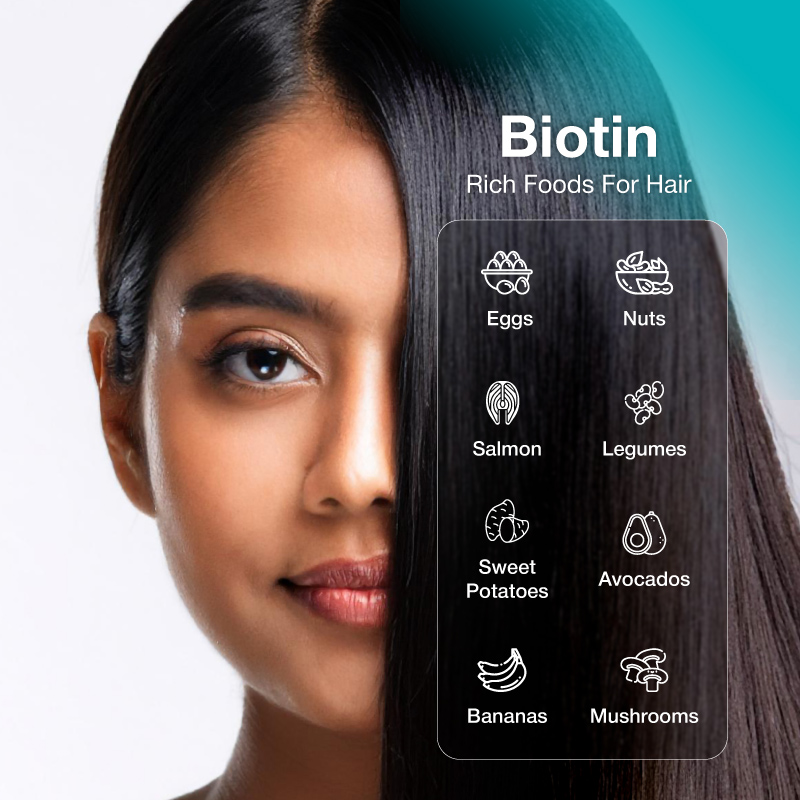
Biotin can be obtained from both plant and animal sources in our diets. Some of the biotin-rich foods for hair growth are listed here:
-
Eggs
One of the top biotin foods for hair growth is egg yolk. High in albumin, egg yolks are not only rich in protein, iron, and phosphorus but are also an excel-lent source of biotin. A whole cooked egg provides around one-third of the daily recommended value of biotin.
-
Organ Meats
Organ meats, especially liver, are high in biotin content. Around 75 grams of cooked beef liver provides around 31 micrograms of biotin, which is nearly 100% of the daily recommended value (DV).
-
Nuts and Seeds
A source of unsaturated fat and fibre, a handful of nuts and seeds can account for around 5% of the DV of biotin.
-
Salmon
Another food rich in biotin for healthy hair is salmon. High in omega-three fatty acids, 85 grams of pink salmon contains approximately 5 micrograms of biotin, or 17% of the DV.
-
Sweet Potatoes
Among plant sources, sweet potatoes are one of the best biotin foods for hair growth. Half a cup of cooked sweet potatoes can provide nearly 8% of the DV of biotin [5] .
-
Legumes
Protein and fibre-rich legumes like lentils, peas, beans, peanuts, and soybeans are among the plant-based foods high in biotin for hair growth. An ounce of legumes can provide up to 17% of the DV for biotin.
-
Avocados
A medium-sized avocado contains nearly 1.85 micrograms, or 6% of the DV of biotin. An avocado and olive oil mask can provide deep nourishment and shine to your hair by stretching the shafts while enriching them with nutrients.
-
Bananas
Rich in zinc and calcium, a medium banana roughly provides 0.2-0.4 micrograms of biotin.
-
Dairy Products
A single serving of dairy products like milk, plain yoghurt, and cheese can provide 0.2-0.4 micrograms of biotin, which can help promote skin, hair, and nail health.
-
Leafy Greens
Green leafy vegetables like spinach, broccoli, kale, and lettuce are excellent plant-based biotin foods for hair, and they also contain iron and folate to boost hair strength and growth.
-
Mushrooms
Research suggests that mushrooms produce biotin as a protective substance that shields them against parasites and other wild predators [6] .
How Much Biotin Do You Need Daily?
The recommended daily intake value of biotin for adults is 30 micrograms. It is usually safe to be consumed in slightly higher amounts during pregnancy and breastfeeding as well, but medical supervision is recommended. In case of specific health conditions or medications, consulting a healthcare advisor is best for proper guidance on dosage and safety.
What Are The Side Effects Of Biotin Deficiency?
A few of the common side effects of biotin deficiency include:
- Dry, itchy, or scaly skin
- Dry eyes
- Dry/cracked corners of the mouth
- Red rashes on the face
- Brittle hair and nails
- Hair loss
- Fatigue
- Insomnia
- Loss of appetite
- Upset stomach
- Muscle pain
- Needle-like sensation in hands and feet
A more serious deficiency of biotin may lead to:
- Depression
- Nausea
- Difficulty in walking
- Seizures
When To Consult Dermatologists?
If you are experiencing excessive scalp dryness, scaling, flaking, or sudden or rapid hair loss, it is best to contact a certified dermatologist for further investigation. Hair thinning, loss of volume, weight changes, and mood fluctuations may all be indicative of severe biotin deficiency, which must be medically addressed. An experienced dermatologist can provide a detailed diagnosis and offer tailored treatment for holistic and long-term solutions. Our expert dermatologists at Oliva offer bespoke and advanced hair treatments. You can book a consultation online for a specialised session.
Takeaway
Biotin is an extremely popular and widely recommended hair supplement. It is a water-soluble B vitamin that is essential for the body to produce energy from food. Several dietary sources can provide sufficient biotin; however, its deficiency can cause symptoms such as hair thinning, breakage, or even alopecia. It is important to check in with a dermatologist if you notice any unusual changes in hair thickness, growth patterns, or overall scalp health for timely support and guidance.
Frequently Asked Questions On Biotin Rich Foods For Hair
Biotin supplements can help prevent hair loss and support keratin synthesis in individuals with biotin deficiency. However, research supporting its proven efficacy in hair growth remains limited.
Consuming biotin-rich foods like egg yolks, sweet potatoes, liver, and nuts is generally preferred to taking supplements.
Yes, curd (or plain yoghurt) is a good source of biotin. One cup of plain yoghurt contains around 0.2-0.3 micrograms of biotin.
Biton-rich foods are generally safe for consumption. However, biotin supplements may interfere with certain medications; thus, consultation with a physician is recommended in such cases.
Read This Next