

 Laser Hair Reduction
 Hair Re-Growth
 Acne / Scar
 Skin Rejuvenation
 Insta Glow Solutions
 Pigmentation
 Anti-Aging
 More
More Body
Body
 Facts Checked
8 Collagen-Rich Foods Vegetarian Sources to Boost Natural Collagen


Our body makes collagen naturally. However, this production can slow down with age, leading to a loss of elasticity and visible signs of ageing. If you are looking to boost your collagen levels naturally without supplements, collagen is mostly found in animal products such as bone broth and meat. But there comes the actual challenge. What about vegetarians and vegans who look for natural collagen sources? Here is the good news. There are plant-based foods that contain collagen-supporting nutrients, which help boost the body’s natural collagen production. If you are looking for collagen-rich vegetarian foods, this article is for you. In this ultimate guide, we will provide a list of vegetarian foods you can add to your routine to support collagen production. Additionally, we will discuss other ways to increase collagen naturally.
In This Article
What Is Collagen And Why Is It Important?
Collagen is the most abundant protein in your body, accounting for almost one-third. It is responsible for maintaining your skin, hair and body health. Made of amino acids, collagen provides strength, structure, and support to your skin, nails, hair, bones, muscles, tissues and cartilage.
How Can You Boost Collagen Naturally With A Vegetarian Diet?
The best way to obtain collagen supplements is through diet. While collagen is naturally found in animal-derived sources and seafood, it does not occur in plants. However, there are certain foods you can incorporate into your diet that can enhance natural collagen production in your body. These foods contain essential nutrients, such as vitamin C, amino acids, sulphur, zinc, copper, and antioxidants, that boost collagen synthesis in the body.
How Can You Boost Collagen Naturally With A Vegetarian Diet?
The best way to obtain collagen supplements is through diet. While collagen is naturally found in animal-derived sources and seafood, it does not occur in plants. However, there are certain foods you can incorporate into your diet that can enhance natural collagen production in your body. These foods contain essential nutrients, such as vitamin C, amino acids, sulphur, zinc, copper, and antioxidants, that boost collagen synthesis in the body.
What Vegetarian Foods Help In Natural Collagen Production?
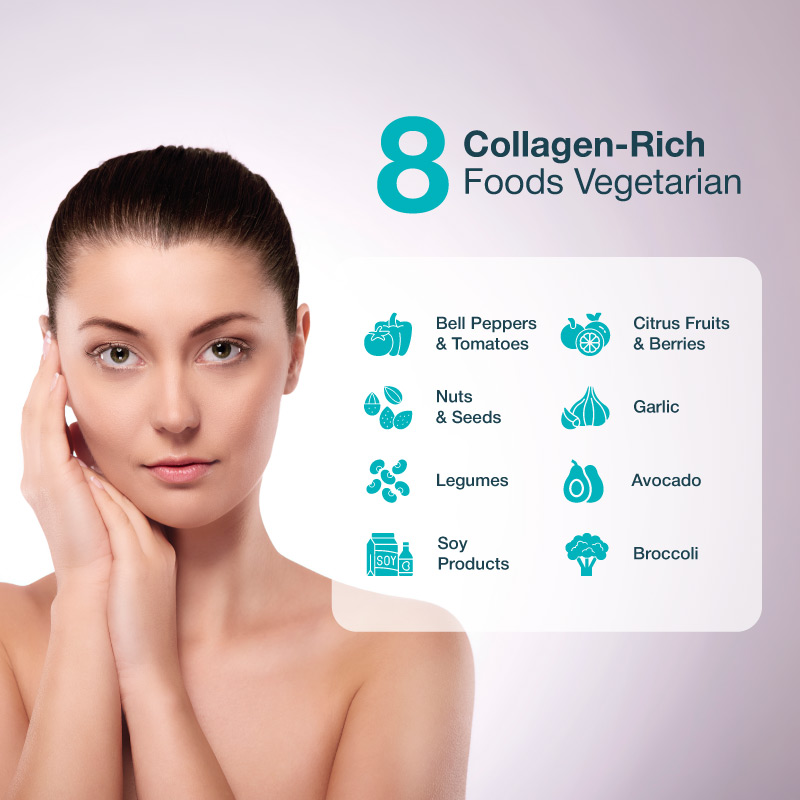
Given below is the list of collagen-rich foods that vegetarians can consume to boost collagen levels in their bodies naturally:
-
Citrus Fruits & Berries
Citrus fruits like oranges, lemons, and Indian gooseberry are rich sources of vitamin C, which is essential for collagen production in the body. Similarly, strawberries, raspberries, and blueberries are high in vitamin C and antioxidants, which are crucial for collagen synthesis. Consuming these foods can help your body produce collagen naturally.
-
Soy Products
Soy products like tofu, soy milk, tempeh and others are nutrient-dense, and very popular among people following vegetarian and vegan diets. While these plant-based protein sources do not contain any collagen, they can serve as the building blocks for collagen production. These soy products provide nine essential amino acids, including glycine, arginine, proline, lysine, and others, which are crucial for collagen synthesis.
-
Nuts & Seeds
Nuts like cashews and almonds are rich in zinc and copper content that support collagen formation in the body. On the other hand, seeds like pumpkin and sesame seeds are also high in zinc and healthy fats that boost your body’s ability to produce collagen naturally.
-
Garlic
This sulphur-rich food not only adds flavour to your dishes but also helps boost your body’s collagen synthesis, too. Sulphur is an essential mineral that supports collagen production and helps prevent collagen breakdown. Adding garlic to your daily diet can help you reap the benefits.
-
Bell Peppers & Tomatoes
Tomatoes are yet another rich source of vitamin C, an essential nutrient for supporting collagen production. Additionally, they contain lycopene, an antioxidant that helps protect your skin from collagen breakdown. Bell Peppers also contain vitamin C, which helps your body increase collagen naturally. You can consume them together in a salad or individually.
-
Legumes
Legumes are yet another collagen-synthesising food. They are rich in amino acids, vitamin C, copper, and iron, all of which are crucial for collagen synthesis. Some of the popular collagen-boosting legumes to include in your regular diet are chickpeas, kidney beans, black beans and lentils.
-
Avocado
Avocados are good for boosting collagen synthesis. They contain vitamin C, vitamin E, healthy fats and antioxidants which help promote collagen production. Consume at least 1 avocado daily by adding it to your salads, smoothies, or toasts. It supports collagen metabolism and improves skin elasticity.
-
Broccoli
Broccoli is a natural collagen booster known for its high vitamin C content. It is also a rich source of iron and antioxidants, which help prevent collagen breakdown. To maximise collagen benefits, consume broccoli raw or lightly steam it. You can also pair it with healthy fats, such as olive oil.
Lifestyle Habits That Support Collagen Naturally
While adding collagen-boosting foods to your diet is a wonderful way to increase your collagen levels, there are other ways to do so naturally. These are lifestyle changes you can make alongside your diet. Combining these practices with your collagen-rich foods can help bring a significant impact over time.
- Protect Skin from UV Rays: Excessive sun exposure can break down collagen. Hence, it is always recommended to apply a broad-spectrum sunscreen daily to protect your skin from the sun’s harsh UV rays. Wear protective clothing and use accessories such as hats, scarves, and sunglasses to shield yourself from the sun.
- Increase Vitamin C Intake: Try to include vitamin C-rich foods in your daily meals, such as oranges, lemons, bell peppers, broccoli, and berries.
- Limit Sugar and Processed Foods: Excess intake of sugar and processed foods can weaken collagen fibres. It is advisable to limit their intake as much as possible.
- Prioritise Sleep: Your body heals and repairs when you sleep, and produces collagen. So, make sure you get ample sleep of about 7 to 9 hours.
- Manage Stress: Chronic stress can weaken your collagen fibres by increasing cortisol levels. Hence, practice stress management through yoga, meditation, or deep breathing exercises.
- Stay Hydrated: Drinking plenty of fluids daily keeps your body hydrated and your skin plump. All of these support collagen formation by facilitating the transport of nutrients required for its synthesis.
- Regular Exercise: There is a connection between regular exercise and collagen. Daily physical activity boosts collagen levels by increasing blood flow and oxygen delivery to the skin cells.
- Avoid Smoking: Quit smoking, as it accelerates collagen breakdown and causes premature ageing.
How To Prevent Collagen Deficiency?
Preventing collagen loss is not as difficult as you think. All it requires is a little effort and consistency. Consuming a nutrient-rich diet daily, considering collagen supplements and making simple lifestyle changes can help prevent collagen deficiency.
When To Consult Dermatologists?
While it is natural to experience collagen decline in the mid-twenties, these changes can sometimes become a matter of concern. Hence, it is essential to recognise the signs of collagen deficiency. Here are some key indicators to look for that will help you identify a severe deficiency and the immediate need for medical intervention.
- Visible changes in skin, like deep wrinkles, fine lines, sagging skin, and loss of elasticity.
- Thinning of skin, where it appears more fragile and develops a paper-like texture.
- Your wounds take longer to heal.
- Brittle nails and thinning hair that break easily.
- Your skin starts to look dull or dry, with a rough texture.
- When cellulite becomes more prominent.
Takeaway
Collagen is the most important protein in your body that contributes to the structural integrity of skin, hair, nails, bones and muscles. Adding collagen-rich foods to your diet can naturally boost collagen levels. Additionally, combining these foods with lifestyle tips can help keep your skin firm and maintain your overall body health.
Frequently Asked Questions On Collagen Rich Foods for Vegetarian
Yes. We can stimulate new collagen production in the body through clinical treatments like microneedling and laser therapy. You can also do so by using topical retinoids and consuming a diet rich in Vitamin C and essential amino acids.
The most common indicators of collagen deficiency include visible wrinkles, sagging skin, a hollowed appearance around the eyes, thinning skin and increased stiffness in your joints and tendons.
No. Collagen does not occur in plants; it is found only in animal tissues. However, certain vegetarian foods, such as citrus fruits, berries, leafy greens, nuts, and seeds, contain Vitamin C, zinc, and amino acids that boost collagen synthesis in your body.
Collagen synthesis is a slow biological process. Hence, it will take at least 3 to 6 months of consistent nutritional intake to see visible improvements in skin elasticity or joint health.
Read This Next
Difference Between Acne Marks Vs Acne Scars

Multani Mitti for Skin: Benefits, Myths, & DIY Face Pack Recipes Explained.

Chemical Peel: Benefits, Procedure And Side Effects

Skin Peeling On Face: Causes, Treatments, Home Remedies & Prevention

Home Remedies for Dark Underarms: Natural Ways to Lighten Dark Armpits