
 Laser Hair Reduction
 Hair Re-Growth
 Acne / Scar
 Skin Rejuvenation
 Insta Glow Solutions
 Pigmentation
 Anti-Aging
 More
More Body
Body
 Facts Checked
Importance of Moisturiser: Why Your Skin Needs Daily Hydration


Moisturisation is a crucial step of your skincare routine to keep your skin healthy, hydrated and plump. While most people often skip this step, a moisturiser forms a protective barrier on the skin, sealing in moisture. Whether you have dry, normal, or oily skin, moisturiser is an unskippable step in your AM and PM routine. Continue reading this article to learn about the importance of moisturiser, its types, and how to use a moisturiser to maximise its benefits.
In This Article
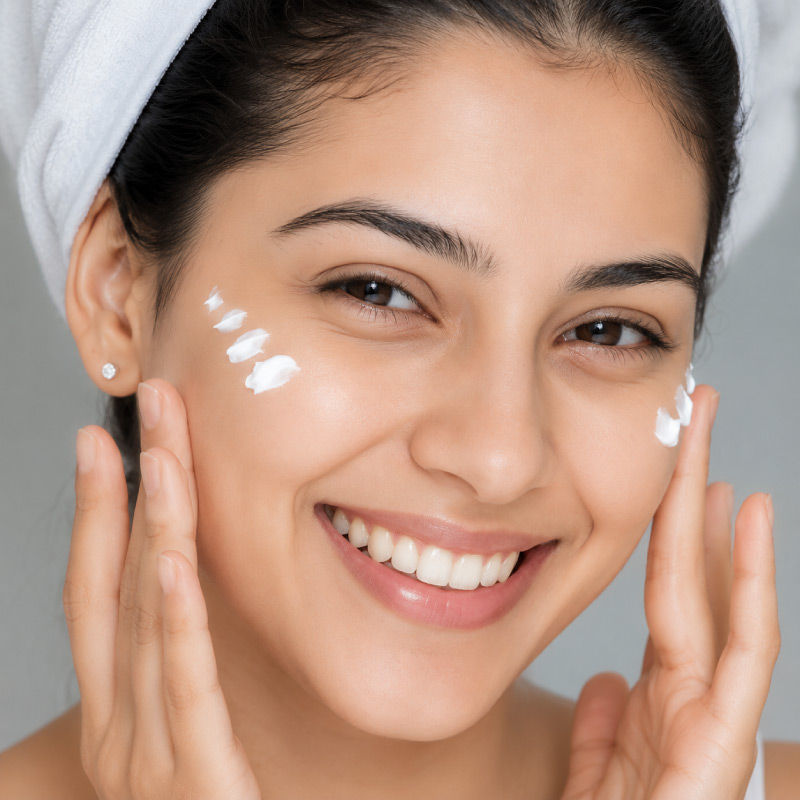
What Is A Moisturiser?
A moisturiser is a skincare product specially formulated to keep the skin hydrated and smooth by locking in moisture. Apart from preventing moisture loss, a moisturiser also helps protect the skin barrier from environmental damage and supports its youthful appearance. It is available in cream, gel and lotion forms. A moisturiser product contains these three components humectants, emollients and occlusive, each with a special function.
What Is the Purpose of Moisturiser & Why Is It Important?
- The primary purpose of a moisturiser is to hydrate the skin by locking in moisture to prevent dryness, flaking and irritation. The moisturising components or agents help achieve this purpose.
- Humectants sustain hydration by drawing moisture onto the skin from the environment or deeper layers of the skin.
- Emollients soften and smooth the skin by filling the gaps between the cells. They help soothe dryness, flaking and irritation.
- Occlusives form a protective barrier on the skin to seal moisture and prevent water loss.
- Here is an answer to your question about why moisturiser is important. A moisturiser does more than hydrate your skin. It protects the skin, improves texture, supports the skin barrier, keeps the skin supple, soothes redness and irritation, reduces the signs of ageing, and balances oil production.
What Are The Types Of Moisturisers?
Moisturisers are available in various formulations, depending on their hydrating properties. These include:
-
Face Creams
Cream moisturisers have a soft, silky, creamy texture and a thicker consistency, with a high concentration of oils. They offer deep nourishment to the skin and are more suitable during winter or dry climates. Creamy moisturisers are ideal for people with dry, mature and dehydrated skin.
-
Gel-based Moisturisers/Water-based Moisturisers:
Gel-based or water-based moisturisers come with a lightweight texture and are generally oil-free. They are quickly absorbed into the skin, leaving no greasy residue. They offer hydration without feeling too heavy on your skin. These types of moisturisers are ideal for people with oil and acne prone skin and those living in humid climates.
-
Lotions
Lotion moisturisers are water-based and lightweight moisturisers. They are lighter than creams and offer more nourishment than gel-based ones. They are quickly absorbed and are perfect for daily wear. Lotions are suitable for normal to combination skin types and are a popular option for daytime use.
-
Ointment-based Moisturisers:
Ointment moisturisers are the thickest of all types and have greater oil content. They are highly occlusive and lock in moisture by creating a protective barrier on the skin. They are highly effective for extremely dry, flaky skin. Dermatologists often recommend such moisturisers for people with eczema-prone skin and those living in harsh environments.
How To Choose A Moisturiser?
Choosing the right moisturiser for your face is crucial to maintaining good skin. Since everyone’s skin is unique, it becomes imperative to select an appropriate one. Look for these factors below when shopping for a moisturiser.
-
Skin Type
The first thing to consider when selecting a face moisturiser is your skin type. Not all moisturisers are suitable for all skin types. You should pick one based on your skin’s needs. If you have dry skin, opt for rich creams or moisturisers that lock in the moisture. Look for lightweight, oil free moisturisers if your skin is oily and acne prone. Make sure they are gel- or water-based moisturisers, as these do not clog pores. If you have combination skin, look for one that offers both hydration and oil control. For people with sensitive skin, an irritant-free, hypoallergenic moisturiser is best, as it is gentle and soothing.
-
Concerns
Consider your skin concerns as well. A facial moisturiser that you choose should address your specific skin concerns, like acne, dullness, uneven texture, fine lines, and wrinkles, while offering hydration to your skin.
-
Key Ingredients
The ingredients you use should suit your skin. Therefore, look for ingredients that are beneficial to your skin while also nourishing. It should contain essential ingredients like humectants, emollients, and occlusives. If you have dry skin, look for humectants like hyaluronic acid, glycerin, or aloe vera that draw moisture into the skin. If you want to soften or smooth your skin, look for emollients like ceramides or shea butter. For skin barrier protection and moisture retention, occlusives like petrolatum are the best.
-
Climate
Another important factor to consider when selecting the right moisturiser is your climate and temperature. If you live in a cold or dry climate, you need heavier creams and lotions to give your skin that extra hydration. If you live in a humid environment or in a summer climate, opt for lightweight, gel- or water-based moisturisers.
How To Use A Moisturiser?
While using a moisturiser is one thing, using it correctly can help you enjoy its benefits to the fullest. Here is a step-by-step process for how to use a moisturiser the right way:
- Step 1: Wash your face thoroughly with a gentle cleanser to remove oil, dirt, and impurities.
- Step 2: Take a moisturiser suited to your skin type and squeeze a small amount just enough to cover your face and neck. Dab it all over on a clean, damp face.
- Step 3: Gently massage in upward circular motions.
- Step 4: Give it a minute or two to absorb, then follow with an SPF.
When To Use Moisturiser?
One should know how to use a moisturiser correctly and when to use it. Let us know when is the best time to use a moisturiser:
- After Cleansing: Always apply a moisturiser after cleansing, exfoliation or shower. That said, you should use a moisturiser only on a clean, damp face.
- At Night: While most people use moisturiser in their day routine, it should be a part of their PM routine as well. It is during the night that your skin repairs itself. Always apply a nourishing moisturiser to a clean face before bed. This supports the skin’s repair and regeneration processes, giving you supple, hydrated skin when you wake up in the morning.
- Before Sunscreen: You should always apply a moisturiser after your toner and before your sunscreen. Your moisturiser should be followed by sunscreen, the last step of your skincare routine.
Who Should Use Moisturiser?
A moisturiser is for everyone, regardless of gender or skin type and tone. Using a moisturiser helps to maintain a healthy skin barrier, ensures proper hydration, prevents dryness and reduces signs of ageing. Even if you are acne-prone, have dry, sensitive, or ageing skin, you need a moisturiser daily to protect and maintain your skin’s health.
Takeaway
Moisturiser is an important part of the skincare routine that hydrates your skin and prevents dryness. Choosing the right product with the right ingredients, and using it the right way and at the right time, is crucial to benefit from it. If you have not been using moisturiser regularly, make it a must-have step of your daily skincare routine (both AM and PM). If you are wondering which moisturiser to use, Oliva has a wide range of products catering to every individual based on their skin type and concerns. Visit our online store and choose the option that best suits your skin needs.
Frequently Asked Questions Importance Of Moisturizer
Yes. Moisturising your skin daily with a rich, nourishing moisturiser keeps it hydrated, protects the barrier, and maintains healthy skin.
Use a coin-sized amount of moisturiser, which is usually enough to evenly cover your face and neck.
No, moisturisers do not darken skin. Instead, they help improve your skin’s hydration and overall skin appearance.
The time taken for a moisturiser to absorb depends on the formulation and skin type. Most moisturisers absorb within 1–3 minutes.
Yes. Moisturising your skin at night helps repair and hydrate your skin while you sleep.
Moisturise your face twice daily for the best results, once in the morning and once at night.
Read This Next