

 Laser Hair Reduction
 Hair Re-Growth
 Acne / Scar
 Skin Rejuvenation
 Insta Glow Solutions
 Pigmentation
 Anti-Aging
 More
More Body
Body
 Facts Checked
Microneedling vs Chemical Peel: Which Suits Your Skin?
Do you have pigmentation, uneven texture, wrinkles or fine lines? Do you want to revitalise your skin? You may have heard about the professional treatments Microneedling and Chemical Peels. These two are the most popular skin rejuvenating treatments often recommended by dermatologists. If you are wondering which treatment is the best and which one suits you the best, you have come to the right place. In this article, we will take up the microneedling vs chemical peels debate for you. We will take you through how each treatment works, its benefits, cost and the results you can expect to help you make an informed decision. Continue reading the article till the end to get a better understanding of these treatments.
In This Article
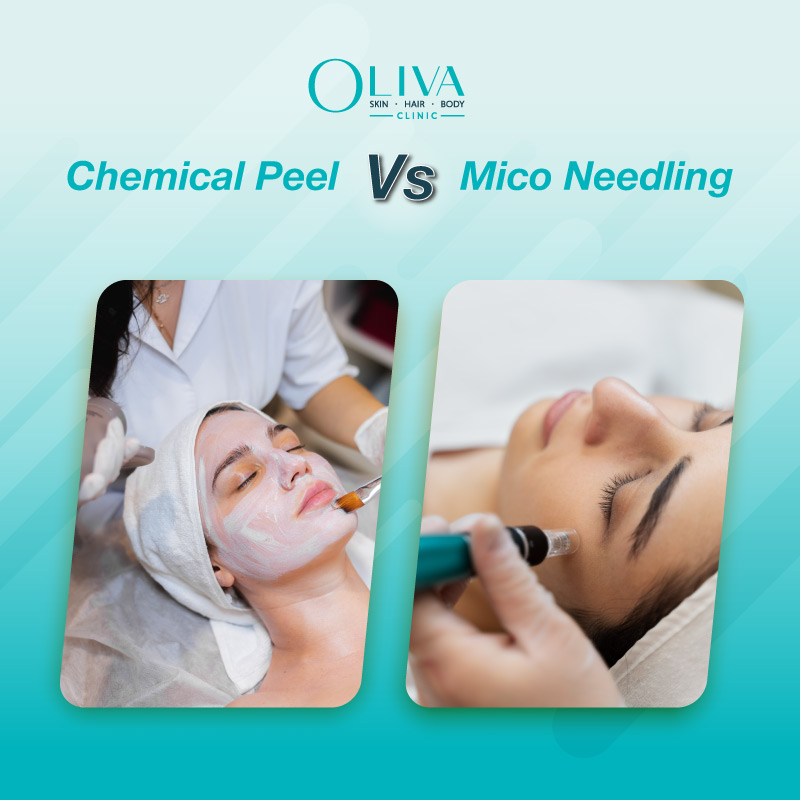
What Is A Chemical Peel? How Does It Work?
A chemical peel is a skin rejuvenation treatment that involves the application of a chemical solution to the skin to improve its appearance. This chemical solution allows controlled exfoliation of the damaged outer layers of the skin. This process removes dead skin cells, encourages new cell turnover, and stimulates collagen production, to reveal a fresh, younger and smoother skin underneath.
What Are The Benefits Of A Chemical Peel?
Here are several benefits of chemical peels:
- Reduces acne and oil production.
- Lightens pigmentation and gives an even skin tone and texture.
- Brightens dull skin and gives a radiant complexion.
- Reduces the appearance of fine lines and wrinkles.
- Enhances the effectiveness of skincare products by allowing proper penetration of active ingredients.
What Are The Concerns Treated Using A Chemical Peel?
Dermatologists recommend chemical peels to treat the following concerns:
- Acne
- Acne scars
- Enlarged Pores
- Wrinkles
- Fine Lines
- Dull Skin
- Rough Texture
- Suntan
- Melasma
- Dark Spots
What Are The Types Of Peels?
Chemical peels can be classified into 3 types based on their depth of penetration. These include:
- Superficial Peels
- Medium-depth Peels
- Deep Peels
What Is Microneedling? How does it work?
Microneedling is a minimally invasive skin rejuvenation treatment that uses a special device to create controlled micro-injuries on the skin. This process initiates a healing response in the skin by stimulating collagen production, giving you a tighter, firmer and smoother skin.
What Are The Benefits Of Microneedling?
Here are several benefits of microneedling:
- Reduces the appearance of acne scars.
- Minimises the appearance of fine lines and wrinkles.
- Lightens hyperpigmentation or dark spots and gives an even skin tone.
- Reduces the appearance of enlarged pores.
- Improves skin firmness and elasticity.
- Minimises the appearance of stretch marks.
What Are The Concerns Treated Using Microneedling?
Dermatologists often recommend microneedling to individuals with the following concerns:
- Mild Acne Scars
- Stretch Marks
- Fine Lines
- Wrinkles
- Enlarged Pores
- Dark Spots
- Uneven Skin Tone
What Are The Types Of Microneedling?
Microneedling can be classified into different types based on the technique used. Here are the common types of microneedling available:
- Traditional Microneedling
- Microneedling with Radiofrequency
- Microneedling with PRP
What Is The Difference Between Chemical Peel And Microneedling?
Before deciding between chemical and microneedling, you should understand how each treatment works. Here is an overview of the chemical peel vs microneedling:
| Parameter | Chemical Peels | Microneedling | |
| Procedure | A chemical solution with a specific concentration is applied to exfoliate and remove damaged outer skin layers. | A device with tiny needles is used to create controlled micro-injuries on the skin to stimulate collagen production. | |
| Skin Concerns Addressed | Pigmentation, suntan, dullness, acne, acne scars, enlarged pores, uneven skin tone, and fine lines. | Acne scars, enlarged pores, fine lines, wrinkles, texture irregularities, and stretch marks. | |
| Depth of Treatment | Can be superficial, medium, or deep, depending on the peel used. | Usually targets deeper skin layers through controlled micro-channels. | |
| Downtime | Mild peeling and redness for 2–7 days, depending on peel strength. | Redness and sensitivity usually last 1–3 days. | |
| Pain Level | Mild tingling or burning sensation during the procedure. | Mild discomfort; numbing cream is usually applied before treatment. | |
| Results | Brighter, smoother skin with lightened pigmentation and improved texture. | Firmer, smoother skin with reduced scars and improved collagen remodelling. | |
| Recovery | Skin peeling and dryness may occur before fresh skin appears. | Skin heals gradually as collagen production increases over weeks. | |
| Ideal Candidates | People with pigmentation, dull skin, tanning, mild acne, or uneven tone. | People with acne scars, enlarged pores, fine lines, or skin laxity. | |
| Risks & Side Effects | Temporary redness, peeling, sensitivity, or post-inflammatory pigmentation if not done properly. | Redness, swelling, temporary sensitivity, or minor pinpoint bleeding. | |
How To Choose Which One Is Best For Your Skin?
Which treatment is best for you depends on the concern and its severity. Dermatologists will analyse your skin and then decide whether you need chemical peels or microneedling. Sometimes, they will combine both to give you enhanced skin rejuvenation and long-term results. If you want to know which treatment suits you the best, talk to an expert.
What Is The Cost Of Chemical Peel And Microneedling?
The cost of chemical peel or microneedling may vary from person to person, depending on their skin type, concern, severity, size of the target area, depth of the peel, treatment modality and the number of sessions needed. On average, here is the cost of these treatments per session:
- Chemical Peel: INR 1,500 to 30,000 per session
- Microneedling: INR 3,000 to 30,000 per session
For an accurate estimate of the total price, schedule a consultation with an expert dermatologist at Oliva.

When To Consult Dermatologists?
If you notice skin concerns like persistent acne, acne scars, tanning, dull skin, pigmentation or stretch marks, signs of ageing or skin laxity that are becoming more prominent, it is time you opt for professional treatments. Visit a dermatologist who will assess your skin condition, determine the underlying cause and recommend a suitable treatment plan for you. If you do not know where to go and whom to consult, don’t worry. At Oliva, we have the best dermatologists who specialise in offering personalised treatments for every client. They are available across 10 major cities in India. Schedule an appointment with our specialist at your nearest Oliva Clinics today!
Your Transformation Starts At Oliva
Book an Appointment with India’s Largest US-FDA Approved Dermatology Chain
🏢
🏙️
👩⚕️
😊
⭐
Takeaway
Microneedling and chemical peels are popular skin rejuvenation treatments often recommended by dermatologists. Both treat a variety of skin concerns to give you a brighter complexion, smoother texture and a uniform skin tone. To know which treatment suits you the best, consult Oliva’s expert dermatologist, who will determine the right solution for you, tailored to your unique skin type and concern.
Frequently Asked Questions On Chemical Peel Vs Microneedling
Each treatment is unique and works effectively for certain skin concerns. While microneedling works best for scars, texture and stretch marks, chemical peels are usually recommended for acne, pigmentation and dullness.
Microneedling is usually more expensive than chemical peels because of its advanced collagen induction technology.
No. Dermatologists generally do not recommend getting these treatments done together on the same day.
Most chemical peels are done every 3–6 weeks, depending on the peel type and skin concern.
The interval gap between microneedling sessions is usually spaced 4–6 weeks apart, as it allows proper skin healing and collagen formation.
The number of sessions required varies for every individual, depending on their skin type, concern, severity, and their skin’s response to the treatment.
Results for chemical peels or microneedling can be long-lasting with proper skincare and maintenance. However, ageing, sun exposure, and lifestyle factors may affect them over time.
Chemical peels have minimal downtime and may cause peeling for a few days, depending on the depth of the peel. Whereas microneedling usually causes mild redness for 1–3 days.
Read This Next
What Is Becker’s Nevus And How To Treat It?
Multani Mitti for Skin: Benefits, Myths, & DIY Face Pack Recipes Explained.

Home Remedies For Open Pores With Natural Ingredients You Already Have at Home
Chemical Peel Treatment In Pune: Cost, Results & Procedure
Skin Picking Disorder (Excoriation): Causes, Symptoms, Treatment & Prevention Tips