

 Laser Hair Reduction
 Hair Re-Growth
 Acne / Scar
 Skin Rejuvenation
 Insta Glow Solutions
 Pigmentation
 Anti-Aging
 More
More Body
Body
 Facts Checked
Night Skincare Routine for All Skin Types: Steps for Healthy, Glowing Skin


In This Article
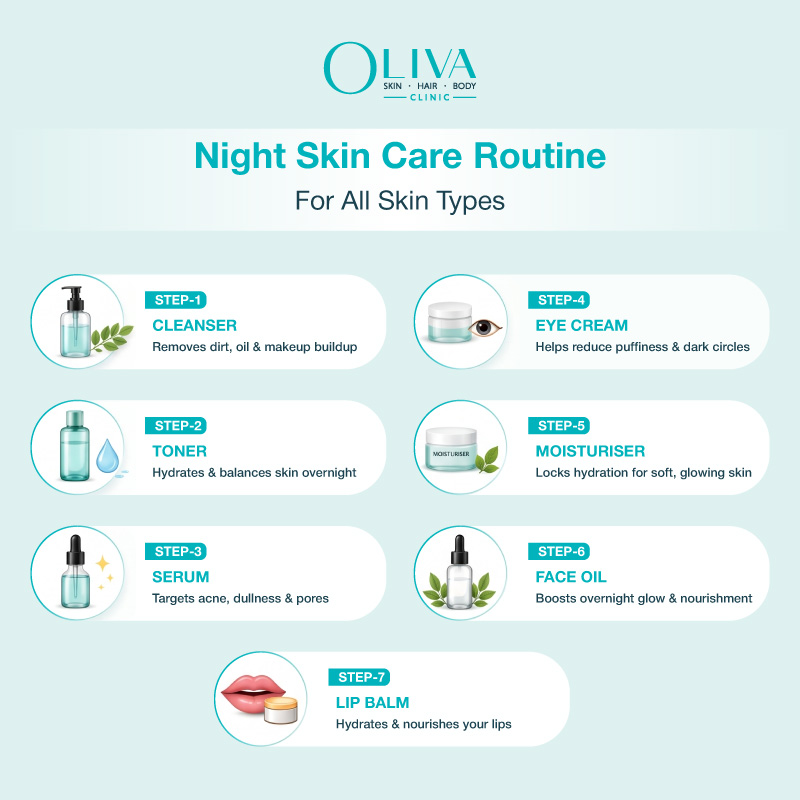
Do you want to wake up glowing with a healthy, hydrated and plumper skin? A nighttime skincare routine can help you give a glowing skin while you sleep. Using the right products and making your PM routine a daily habit can actually help you reap its amazing benefits. If you are someone who is yet to start a night skincare routine, or looking for the best night skin care routine for your skin type, this article is for you. In this guide, we will discuss a night skincare routine for all skin types. Additionally, we will take you through a list of ingredients to look for and avoid in your night skincare routine products.
Why Is A Night Skin Care Routine Important?
Most of us neglect our night skincare routine, thinking that the morning routine will suffice. It is not true. Our skin repairs during the night. It rejuvenates and regenerates new cells. Moreover, without the external factors (dirt, oil, makeup, and pollution), it allows for the proper absorption of nourishing ingredients that support your skin’s healing and skin barrier damage repair. For this, you need an effective night skincare routine. Consistently using a nighttime routine enhances your skin’s natural repair process, supports hydration and keeps your skin healthy, radiant and youthful. Not just that, a good PM routine prepares your skin for the next day.
How Skin Repairs Itself Overnight?
When you sleep during the night, your skin’s natural repair process is activated. This overnight skin renewal takes place in steps:
Enhances Blood Flow: The blood flow to the skin increases, delivering essential nutrients and oxygen to the skin cells. This accelerates the repairing process.
Collagen Production: During deep sleep, our body releases high levels of growth hormones, which stimulates tissue regeneration and collagen production. This helps improve our skin firmness and elasticity.
Cellular Regeneration: Skin cells regenerate faster by increasing their turnover speed and shedding dead skin cells. This action reveals fresher and brighter skin layers.
Barrier Repair: DNA and barrier repair mechanisms are activated, mending the damage caused by UV and pollution. This makes the skin more receptive to the active ingredients in skincare products.
Reduces Inflammation: During sleep, your cortisol levels drop, reducing inflammation and breakouts.
Night Skincare Routine Steps For All Skin Types
Here are the steps in the night skincare routine for all skin types:
Step 1: Makeup Removal
Never go to bed with your makeup on. Start your nighttime skincare routine by removing the makeup or sunscreen that you have been wearing all day long. Use an oil-based cleanser to remove all the makeup, sunscreen and excess oil on your face. Then rinse with lukewarm water.
Step 2: Cleansing
If you are wearing makeup in the day, always do a double cleansing. Now, follow up your first step with a water-based cleanser to remove any residue of the makeup, dirt, or pollutants. Use lukewarm water to rinse.
Step 3: Exfoliation (2-3 Times a Week)
Exfoliate your skin twice or thrice every week using a chemical exfoliant like AHA or BHA to remove all the dead skin cells and unclog the pores. You can also use a physical scrub to exfoliate. Be gentle while exfoliating, and do not overdo it.
Step 4: Toning
The next step after cleansing or exfoliating your face is using a toner to balance your skin’s pH levels. It removes any residue that remains and prepares your skin for the better absorption of products that you apply in the next steps.
Step 5: Serum Application
Step 5 of your night skincare routine is applying serum or any spot treatment to target your specific concerns. This step delivers the potent ingredients like hyaluronic acid, niacinamide, peptides, vitamin C or retinol directly to your skin.
Step 6: Eye Cream
The most important yet neglected step of your nighttime skincare routine is caring for your eye area. The skin under your eyes is delicate, thin and easily prone to issues like pigmentation, dullness and fine lines. Use an eye cream and gently pat it around your eyes to give it enough hydration it needs.
Step 7: Moisturiser or Night Cream
Now that you have moisturised your eye area, it’s time for the rest of your face. Use a good moisturiser to seal the hydration and support your skin barrier.
Step 8: Face Oil (Optional)
For intense hydration or nourishment, you can use a sleeping mask overnight. Alternatively, you can also apply a few drops of facial oil. Make sure you perform this step one to three times a week.
Step 9: Lip Care
Do not forget your lips. Lip care is as important as your skin care. Use a nourishing lip balm to keep your lips hydrated, smooth, soft and plump
Customise Your Night Skin Care Routine for Your Skin Type
The nighttime skin care steps remain pretty much the same for all skin types. However, doing small tweaks here and there can significantly impact your routine, depending on your skin type. Here is the night skincare routine customised for each skin type.
Night Skin Care Routine For Dry Skin
Dry skin needs more hydration. Try to make these adjustments in your nighttime skincare routine for dry skin:
Use a cream-based or oil-based cleanser.
- Exfoliate once or twice a week using a mild AHA.
- Use a hydrating serum containing ingredients like hyaluronic acid or glycerine.
- Exfoliate 1-2 times a week using an exfoliant containing AHAs.
- Apply a cream-based moisturiser with ceramides and shea butter to lock in the moisture from the serum.
- For extra hydration, use an overnight face mask or apply a few drops of nourishing face oil.
Night Skin Care Routine For Oily Skin
Your night skincare routine for oily skin focuses on these points: to control excess oil, unclog pores, hydrate your skin, restore your skin’s barrier and regulate shine overnight.
- Double cleanse your skin. First, use an oil-based cleanser and follow it up with a gel-based or foaming water cleanser.
- Use an alcohol-free toner containing salicylic acid.
- Exfoliate 2-3 times a week using an exfoliant containing BHA.
- For targeted serums, use a niacinamide or retinol serum based on your specific concern.
- Use a gel or water-based moisturiser with ingredients like hyaluronic acid, ceramides or tea tree oil.
Night Skin Care Routine For Combination Skin
In the night skincare routine for combination skin, focus should be on removing excess oil from the T-zone while maintaining hydration on your cheeks.
- Double cleanse your skin. First, use an oil-based cleanser and follow it up with a non-stripping gel-based or foaming water cleanser.
- Use an alcohol-free toner containing hydrating ingredients.
- Exfoliate 2-3 times a week using an exfoliant containing AHAs or BHAs.
- For targeted serums, use a lightweight, hydrating serum that helps balance the T-zone and hydrates the dry area.
- Use a gel-based moisturiser containing ingredients like hyaluronic acid.
Night Skin Care Routine For Sensitive Skin
In your night skincare routine for sensitive skin, the focus should be on using skincare products that help reduce irritation, calm inflammation and promote healthier skin.
- Double cleansing is recommended if you wear makeup. Use a gentle hydrating cleanser to remove the dirt, pollution and makeup. Follow it up with a gentle, sulphate-free cleanser.
- Use an alcohol-free toner containing soothing ingredients like aloe vera, chamomile or oat extract.
- Exfoliate 1-2 times a week using a gentle exfoliant or mild AHA.
- For targeted serums, use a salicylic acid or niacinamide serum to reduce irritation and inflammation.
- Use a fragrance-free moisturiser containing soothing ingredients like hyaluronic acid or ceramides.
Night Skin Care Routine For Acne-Prone Skin
If you have acne-prone skin, your night skincare routine should focus on unclogging pores, reducing breakouts and fading marks.
- Double cleanse your skin. Start with an oil-based or micellar cleanser to remove the dirt, pollution and makeup. Follow it up with a water-based, non-foaming cleanser.
- Exfoliate 2-3 times a week using an exfoliant containing AHAs or BHAs.
- Use an alcohol-free toner containing calming ingredients like salicylic acid, green tea or niacinamide.
- For targeted serums, use a retinol-based serum to reduce acne and post-acne marks, and understand the difference in how morning vs night skincare routine for Acne works to get better results.
- Use a hydrating, non-comedogenic moisturiser containing ingredients like hyaluronic acid, ceramides or green tea.
Night Skin Care Routine For Anti-Ageing
In your anti-ageing night skincare routine, the emphasis should be on promoting cellular turnover, nourishing and hydrating your skin, and reducing signs of ageing.
- Double cleanse your skin. Start with an oil-based or micellar cleanser to remove the dirt, pollution and makeup. Follow it up with a gentle, hydrating cleanser.
- Exfoliate 1-2 times a week using a chemical exfoliator containing AHAs or BHAs.
- Use an alcohol-free toner containing hydrating ingredients.
- Use targeted serums containing ingredients such as retinol for cell turnover and wrinkle reduction.
- Use a moisturiser containing peptides or ceramides to lock in moisture.
Night Skin Care Routine For Normal Skin
If you have normal skin, your nighttime skincare routine should aim at supporting your skin’s natural repair process:
- Double cleanse your skin. Start with an oil-based cleanser to remove the dirt, pollution and makeup. Follow it up with a gentle, water-based foaming or gel cleanser.
- Exfoliate 1-2 times a week using a mild chemical or physical exfoliant.
- Use an alcohol-free hydrating toner to balance your skin’s pH.
- Use targeted serums containing ingredients such as niacinamide or hyaluronic acid based on your specific concern.
- Use a moisturiser containing peptides or ceramides to lock in moisture.
Night Skin Care Routine For Glowing Skin
Your nighttime skincare routine for glowing skin is a simple 6-step process:
- Double cleanse your skin. Start with an oil-based cleanser to remove the dirt, pollution and makeup. Follow it up with a gentle, water-based face wash or a gel-based cleanser containing salicylic acid.
- Exfoliate 2-3 times a week using a mild chemical exfoliant containing AHAs or BHAs.
- Use an alcohol-free hydrating toner to balance your skin’s pH.
- Use targeted serums containing active ingredients such as vitamin C or retinol according to your specific concern.
- Use a nourishing moisturiser containing peptides to lock in moisture.
- Apply an eye cream containing hydrating or brightening ingredients.
Best Ingredients To Look For In Night Skincare Products
Nighttime skincare routine helps activate your skin’s repair and renewal mechanisms. Hence, choosing the right ingredients is essential. Look for the following ingredients in your skincare products:
- Hyaluronic Acid
- Glycerin
- Cermaides
Cellular Repair
- Retinol (Vitamin A)
- Peptides
Skin Brightening
- Niacinamide (Vitamin B3)
- AHAs like Glycolic Acid, Lactic Acid
Antioxidant Protection
- Vitamin C
- Vitamin E
Ingredients To Avoid In Your Night Skincare Routine
Here are some ingredients you need to avoid at night that hinder your skin barrier repair and cause overnight irritation:
- Physical exfoliants
- Synthetic fragrances
- Essential oils
- Drying alcohols
- Silicones
Common Night Skincare Mistakes To Avoid
While a nighttime skincare routine helps in your skin regeneration and repair, there are certain dos and don’ts to it. Here are some common mistakes most people make, and that you should avoid:
- Do not sleep with your makeup on. Sleeping without removing makeup can clog your pores and trap the bacteria inside, causing breakouts.
- Do not over-exfoliate your skin, as it can damage your skin barrier.
- Do not skip moisturiser at night, as it can dehydrate your skin and hamper barrier function.
- Do not layer the products too fast. Allow some time between the product layers.
Do not combine retinol or retinoids with benzoyl peroxide or retinoid with vitamin C, as they can irritate your skin.
Tips For Getting The Most Out Of Your Night Routine
Here are some additional tips to help you get the most out of your nighttime skincare regimen:
- Make sure your skin is slightly damp before applying hydrating ingredients, as it will help lock in the moisture.
- After applying the products, gently massage the products in upward circular motions to allow the proper absorption of the skincare products. This also helps improve the blood circulation.
- When it comes to layering the skincare products, start with the thinnest to thickest in consistency. This allows better absorption of products. That said, your toner comes before your moisturiser or any other cream.
- Be consistent with your night skincare routine, as you will need at least a few weeks to start noticing some changes in your skin.
When To Consult A Dermatologist?
Sometimes, a consistent skincare routine alone does not give you the results, especially if you have some serious skin concerns. You need a targeted treatment to address those issues. Visit a dermatologist if you experience any of the following concerns:
- If you notice persistent acne that does not reduce even after a regular skincare routine.
- If you have pigmentation that does not go away or keeps returning.
- If your skin dryness does not seem to reduce or get any better.
- If you notice sudden breakouts or irritation on your skin.
- If you notice early signs of ageing.
A professional will analyse your skin and personalise a skincare routine suitable for your skin type. They will determine if you need an advanced procedure to address your specific skin concern. At Oliva, our expert dermatologists specialise in offering tailored skincare routines and treatments catering to every individual’s unique skincare needs. Book an appointment with our expert at your nearest Oliva Clinics today!
Takeaway
Nighttime skincare products are specifically designed to be more concentrated than day creams. They help support cellular repair and prevent nighttime moisture loss. Hence, choosing the right products with the right ingredients and using them in the right way is crucial to benefit from your night skincare routine. We hope this article provided you with the insights into how, why and what you should incorporate into your skincare routine. Whether yours is dry, oily, combination or sensitive skin type, cleanse, repair, and hydrate are the key steps in your not-to-miss skincare routine.
FAQs
Yes, you can use retinol almost every night. However, do not dive directly into the nightly application. Start with 2–3 nights a week and then gradually increase the frequency as per your skin’s tolerance.
A simple skincare routine for everyone includes cleansing, toning, treating by applying a targeted serum, and moisturising.
The essential skincare routine that dermatologists often recommend includes 4 steps: cleanse, tone, treat, and hydrate.
Yes. Moisturising is an essential step that you should not miss in your AM or PM skincare routine. Using a moisturiser at night helps repair your skin barrier and also prevents moisture loss while you sleep.
Use products containing ingredients like vitamin C, niacinamide, or retinol to fade dark spots, brighten your complexion and improve your skin radiance.
Yes, you can use the same moisturiser in your AM and PM routine. However, your dermatologists may recommend separate products if you have specific skin concerns.
While your day routine focuses on protection with sunscreen, your night routine focuses on repair, hydration, rejuvenation and cellular renewal.
If you have specific skin concerns like acne, pigmentation, dullness, ageing or dehydration, you can use targeted serums to address them more effectively.
Wait for 30–60 seconds between steps, as it allows the skin to absorb the products properly.
Yes, it is absolutely fine if you skip your night skincare routine occasionally. But dermatologists recommend following a consistent nighttime skincare regimen for the best long-term results.
Yes. But make sure you apply products 20–30 minutes before going to bed, as it allows better absorption.
Avoid combining strong actives like retinoids with AHAs, BHAs, or benzoyl peroxide, and retinol with vitamin C, as they can irritate your skin.
It is advisable to exfoliate 1–3 times per week, depending on your skin type and sensitivity.
Yes. Beginners can follow a night skincare routine by following these simple steps: cleanser, targeting serums and moisturiser.
For a nighttime skincare routine for combination skin, use a gentle cleanser, lightweight hydrating serum, non-comedogenic moisturiser, and targeted treatments.
Read This Next

Harmful Effects Of Smoking & Pollution On Your Skin/Hair
Glycolic Acid For Skin: Uses, Benefits And Side Effects

Best Pimple Scar Treatment: A Real Transformation Through Dermatologist Treatments

Coffee Benefits For Skin: From Exfoliation to Anti-Ageing

Chemical Peel Treatment In Kolkata: Cost, Results & Procedure