
 Laser Hair Reduction
 Hair Re-Growth
 Acne / Scar
 Skin Rejuvenation
 Insta Glow Solutions
 Pigmentation
 Anti-Aging
 More
More Body
Body
 Facts Checked
10 Sunscreen Myths & Facts You Need to Know Right Now


We have heard enough testimonies about how sunscreen protects our skin; however, most of us still doubt its use. The reason is that many misconceptions and misinformations about sunscreen have been circulating, creating confusion. It is important to understand the truth about sunscreen before using it. Here we are with this article to clear the air for you. In this comprehensive guide, we will debunk common myths about sunscreen and present the facts so you will be well-informed about sun exposure and how sunscreen helps. Let us get started.
-
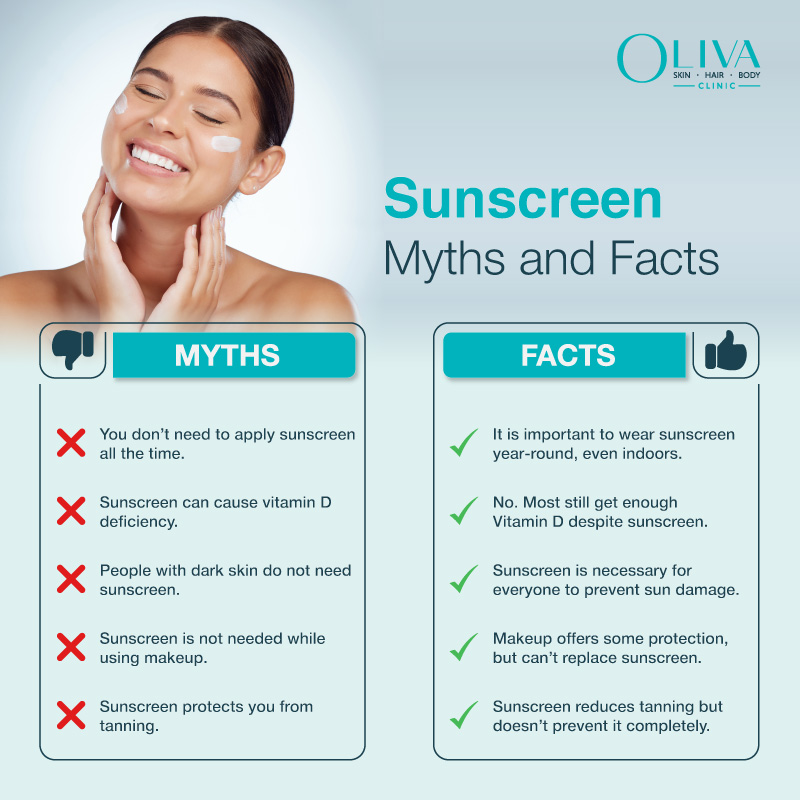
Myth: You don’t need to apply sunscreen all the time.
Fact: This is one of the common myths of using sunscreen that most of us fall for. Our skin is exposed to sunlight and UV rays, even on cloudy or cold days. It is essential to wear sunscreen 365 days a year, whether it is a sunny day or not. Even if you are indoors, it is a must. Reapply it every 2-3 hours when you are outside, in the sun, swimming, or sweating. If anyone tells you, “you don’t have to apply sunscreen every day”, tell them it’s a myth: you need SPF all year round, even when you are staying indoors.
-
Myth: Sunscreen can cause vitamin D deficiency.
Fact: No. This is the biggest misconception about sunscreen. While it is true that sunscreen blocks the UV rays needed for vitamin D synthesis, it is not the cause of vitamin deficiency. In fact, studies have shown that we do not apply sunscreen consistently or often enough to completely stop vitamin D production. Most people still produce sufficient Vitamin D even while wearing sunscreen due to incidental UV exposure.
-
Myth: People with dark skin do not need sunscreen.
Fact: This is a common misconception that darker-skinned people do not need sunscreen. It is well known that people with darker skin tones are melanin-rich and less likely to get sunburned than those with lighter skin tones. However, this does not mean that they will not be affected by sun exposure. Everyone does, regardless of skin tone or texture. People with dark skin can still get sunburn, can still get skin cancer and photoageing. Sunscreen is necessary for everyone to prevent sun damage.
-
Myth: Sunscreen is not needed while using makeup.
Fact: Most people think that they do not need sunscreen because they wear makeup. While makeup can offer some sun protection, it can never replace sunscreen. Makeup is only an additional layer of sun protection, not the only protection. You must apply sunscreen underneath your makeup.
-
Myth: Sunscreen protects you from tanning.
Fact: It is a myth that sunscreen prevents tanning. Although applying sunscreen helps significantly reduce tanning, it does not prevent it altogether. Sunscreen blocks the sun’s harmful UV rays from reaching the skin. However, it cannot completely prevent it. And some radiation can still penetrate your skin, triggering melanin production and causing tanning.
-
Myth : A single application of sunscreen is enough.
Fact: It is a common misconception that you apply sunscreen once and it is done. No, it is not true. You must reapply it every 2-3 hours, especially when you are outdoors or in the sun, sweating or swimming, as the sunscreen wears off. Reapply the sunscreen for whole-day protection.
-
Myth: Sunscreens don’t expire.
Fact: False. Just like every other skincare or cosmetic product, a sunscreen comes with an expiry date. You must throw it if it is past the expiry date. Relying on an expired sunscreen, thinking it won’t make a big difference, will land you in a coup. Once it expires, sunscreen will stop working and no longer protect your skin.
-
Myth: A Little Goes a Long Way.
Fact: No, a little sunscreen does not go a long way. Apply a generous amount of sunscreen to protect your skin from the sun, which is about ¼ to ½ of a teaspoon. Remember the two-finger rule for applying sunscreen: this amount provides proper coverage for your face and neck.
-
Myth: You do not need sunscreen indoors.
Fact: This is a popular misbelief that you do not need sunscreen when staying inside. Most people often skip sunscreen because of this misconception. The truth is, you need to wear sunscreen even indoors, as UV rays can penetrate glass and cause damage. So, wearing sunscreen is non-negotiable, whether indoors or outdoors, on sunny or cloudy days.
-
Myth: My makeup products contain SPF, and I don’t need sunscreen.
Fact: Most people think that they don’t need sunscreen because their makeup products contain SPF. It is not true. Although your cosmetic products contain SPF, the SPF is very low, which is around 5 to 15 SPF. You need an SPF of 30 or higher. Hence, always use a sunscreen as the last step of your skincare routine, before applying your makeup.
Takeaway
Sunscreen is a non-negotiable step in your skincare routine that shields your skin from the sun’s harmful UV rays. With many misconceptions and myths revolving around sunscreen, it is common to be misled. The myths debunked in this article provide you with a complete understanding of sunscreen and its use. Next time someone spreads popular misinformation about sunscreen, know it is not true and, if possible, try to educate them.
Frequently Asked Questions On Sunscreen Myths And Facts
Yes. You need to wear sunscreen whether you are staying indoors or in a car, as the UV rays can penetrate the glass.
No, makeup alone is not enough, even if it has a higher SPF, as it does not provide the required all-day protection. You need a lot of foundation to get that protection. Apply sunscreen as the last step of your skincare routine, then layer it with makeup.
Yes, sunscreen, like any other cosmetic or skincare product, has an expiry date of about 3 years. Using an expired sunscreen will not work or protect your skin from sun damage.
Sunscreen is non-negotiable, whether you are indoors or outdoors, on sunny, cloudy, or cold days.
A sunscreen labelled as water-resistant is better for swimming, as it helps retain SPF protection during water activities. However, you should reapply it after every two hours.