
 Laser Hair Reduction
 Hair Re-Growth
 Acne / Scar
 Skin Rejuvenation
 Insta Glow Solutions
 Pigmentation
 Anti-Aging
 More
More Body
Body
 Facts Checked
SPF Sunscreen Explained: How SPF Protects Your Skin From UV Rays


Staying in the sun for a while to get those perfect sun-kissed pictures is good, but soaking in the sun without any sun protection can cause some serious damage. If you want to enjoy your sunny days, beach trips, or swimming, you must shield your skin from the sun’s UV rays. This is where sunscreen comes into play. This article will explain everything you need to know about sunscreen and SPF. We will answer the question “What is SPF in sunscreen?”, explain why it is important, and show how to choose the right SPF for your skin. Let us dive in.
In This Article
What Does SPF Mean?
SPF stands for Sun Protection Factor. It is a measure of how well a sunscreen protects the skin against UVB rays. The sun emits UV radiation (UVA and UVB), which can be harmful to the skin and cause damage. While prolonged exposure to UVA rays leads to premature skin ageing, UVB rays cause sunburn and tanning, and increase the risk of skin cancer. A sunscreen with SPF protects against harmful UVB rays. Sunscreens often come in different SPF value ranges, with the most common being SPF 15, SPF 30, and SPF 50. SPF 6 to 10 are considered the lowest. SPF 15, 20 and 25 are medium, whereas SPF 30 and 50 are high. SPF 50+ is very high. The higher the SPF level, the longer the protection. Let us learn in detail how SPF works.
How Does SPF Work?
SPF works by preventing the rays from penetrating your skin. This is how it does. SPF incorporates active ingredients (physical blockers and chemical filters) into the sunscreen formulations that create a shield on the skin’s surface. This protective layer either reflects or absorbs UV rays, protecting the skin.
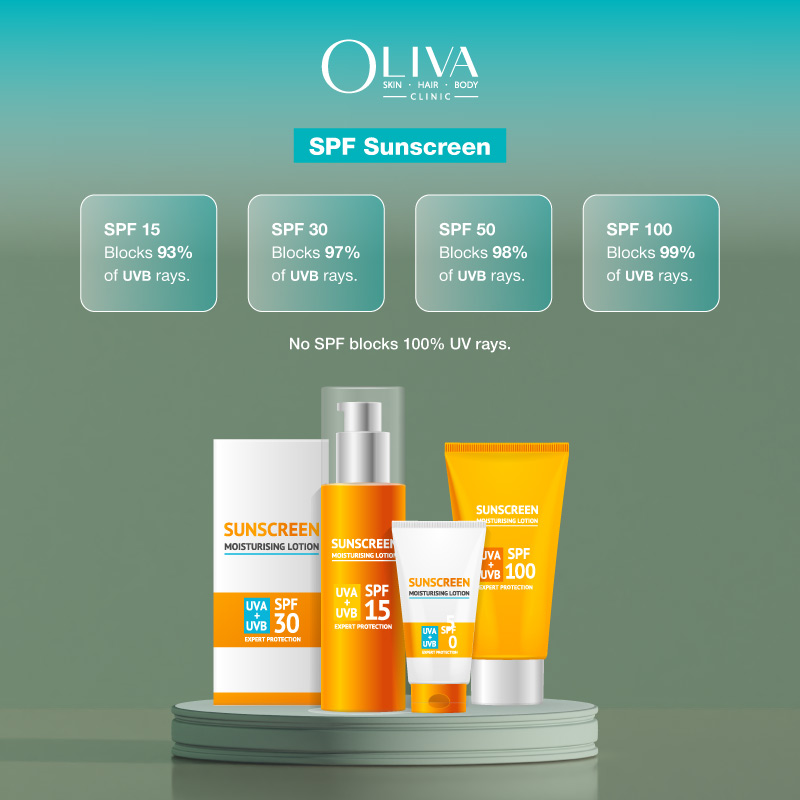
- SPF 15 blocks 93% of UVB rays.
- SPF 30 blocks 97% of UVB rays.
- SPF 50 blocks 98% of UVB rays.
- SPF 100 blocks 99% of UVB rays.
- No SPF blocks 100% UV rays.
What Are The Types Of SPF?
Sunscreens can be divided into two main types based on their mechanism of action Physical Sunscreens and Chemical Sunscreens.
- Physical Sunscreens: When you apply sunscreen, the physical sunscreen ingredients (physical blockers) sit on your skin, forming a protective layer. This layer reflects and scatters the UV rays, thereby preventing them from penetrating your skin. Physical sunscreens are also called mineral sunscreens. The most common mineral sunscreen ingredients are zinc oxide and titanium dioxide. Physical sunscreens have a thicker, heavier texture than chemical sunscreens and work immediately when applied.
- Ideal For: The physical sunscreens are best suited for people with sensitive and acne-prone skin.
- Chemical Sunscreens: The chemical sunscreen ingredients (chemical filters) absorb UVB rays like a sponge and convert them into heat through a chemical reaction. This heat is released from your skin. This is how they prevent the rays from damaging your skin. The most common chemical filters include avobenzone, oxybenzone and octanoate. Chemical sunscreens are lightweight and invisible.
- Ideal For: Chemical sunscreens are most suitable for daily wear and under makeup.
Why Is SPF Important?
Many people think sunscreen is only for summer climates, sunny or beach days, but it is important to know that SPF is necessary year-round. Sun exposure can damage your skin, causing long-lasting effects. Let us learn how SPF benefits your skin and protects it from UV damage.
-
Prevents Premature Ageing
Long-term sun exposure without any protection can break down the collagen and elastin in your skin. This leads to premature signs of ageing, such as fine lines, wrinkles, and sagging skin. Applying SPF daily helps prevent premature skin ageing.
-
Lowers the Risk of Skin Cancer
Continuous exposure to the sun’s UV rays can damage DNA in your cells, leading to skin cancer. Regular application of SPF helps protect your skin against these harmful rays and reduces the risk of skin cancer.
-
Prevents Sunburn and Damage
UVB rays from the sun can cause sunburn, blistering, and tanning, as well as DNA damage. Using an SPF blocks the UVB rays and prevents the burn.
-
Prevents Melasma and Hyperpigmentation
Chronic UV exposure can trigger melanin production, leading to dark spots, melasma, hyperpigmentation, and freckles. Applying SPF religiously helps prevent the formation of hyperpigmentation and dark spots, and helps prevent them from worsening.
-
Helps Maintain Even Skin Tone
Exposure to UV rays can cause blotchy skin and uneven skin tone. Applying SPF sunscreen regularly reduces the occurrence of these conditions and gives you a smoother and more even skin tone.
-
Maintains Skin Health and Hydration
Excessive sun exposure can harm your skin by damaging its moisture barrier. This can make your skin look dry and flaky. Daily application of SPF helps protect your skin’s natural moisture barrier, keeping it hydrated and plump while shielding against UV rays.
How To Apply SPF Correctly?
Now that you know the benefits of SPF, it is important to apply it correctly in order to maximise its benefits. Here are the steps for proper application of SPF:
- Order of Application: Always apply SPF as the final step of your morning skincare routine. It goes after your moisturiser and before your makeup.
- Amount: Most people apply sunscreen less than the recommended amount. Remember the two-finger rule. Use enough sunscreen that covers the length of your index and middle fingers, and apply it evenly to your face and neck. Do not forget the ears.
- Application Technique: While using the right quantity is important, so is using the right application technique. Do not rub the sunscreen harshly over your face. Instead, dot it all over your face, then gently rub it in until absorbed.
- Key Areas: We often miss certain spots when applying sunscreen. Make sure you cover these areas, too: your ears, the back of your neck, and your eyelids. Apply sunscreen to the tops of your feet and hands, as they are exposed to the sun.
- Wait Time: Chemical sunscreens need time to absorb. Apply these sunscreens 15–20 minutes before stepping outside and having sun exposure.
- Reapplication: Reapply sunscreen every 2 hours when outdoors, after swimming, or after sweating.
- Daily Routine: Apply sunscreen as part of your daily skincare routine, whether indoors or outdoors, on cloudy or cool days, year-round.
How To Choose The Right SPF For Your Skin?
Choosing the right SPF for your skin is crucial. There are certain factors you should consider before you shop for a sunscreen.
- SPF 30: If you spend most of your time indoors, choose a sunscreen with SPF 30. It is recommended for daily use.
- SPF 50: If you spend time outdoors or are exposed to the sun for longer periods, SPF 50 or higher is recommended.
- Broad Spectrum: Choose a broad-spectrum SPF with at least SPF 30 that protects from both UVA and UVB rays.
- Skin Type: Your skin type matters when choosing an SPF. Here is what you should look for:
- SPF for Oily Skin: If you have oily, acne-prone skin, opt for lightweight, non-comedogenic sunscreens with SPF 30-50. Using these sunscreens will prevent your pores from clogging and provide adequate sun protection.
- SPF for Dry Skin: People with dry skin should look for sunscreen with hydrating ingredients like hyaluronic acid or glycerine. These hydrate your skin from within by helping you maintain moisture levels without clogging your pores.
- SPF For Sensitive Skin: People with sensitive skin should look for a mineral-based sunscreen with SPF 30 or higher. These are less likely to cause irritation.
- SPF For Combination Skin: If you have combination skin, opt for a lightweight lotion-based sunscreen that balances moisture.
When To Visit A Dermatologist?
If you have never used sunscreen before and are planning to use it now but are unsure which SPF to choose, you need to talk to a professional. Also, if you have sunburns, severe pigmentation, dark spots or tanning, consult a dermatologist. They will analyse your skin condition and suggest a suitable SPF sunscreen that just works for you. If your concerns are intense, they may recommend a targeted treatment to address them.
Takeaway
Most people often ask whether SPF is the same as sunscreen. We hope this article provided you with all the information you need about SPF in sunscreen. Now that you know the importance of SPF, make sure to include it in your daily sunscreen routine. Also, choose the right sunscreen based on your skin type to enjoy its benefits. Use an SPF of at least 30 and apply it daily, 365 days a year, even when indoors. Reapply it every two hours when outdoors.
Frequently Asked Questions On SPF Sunscreen
Use about 1/4 teaspoon of sunscreen for the face, enough to cover the length of your index and middle fingers. To cover your body, use a shot glass amount.
No. Although sunscreen helps protect your skin from sun damage, you should combine it with protective clothing and accessories, such as wide-brimmed hats, scarves, and sunglasses, for complete sun protection.
Yes. Use a dermatologist-recommended mineral-based sunscreen with zinc oxide or titanium dioxide, that is fragrance-free and hypoallergenic if you have sensitive skin.
An SPF 30 or higher is usually recommended for daily use. This offers effective protection against UVB rays.
SPF 50 offers slightly higher protection than SPF 30. While SPF 30 blocks about 97% UVB rays, SPF 50 blocks around 98%.
Sunscreen lasts about 2–3 hours. You should reapply it every 2 hours, especially when outdoors or after sweating or washing.
Read This Next