
 Laser Hair Reduction
 Hair Re-Growth
 Acne / Scar
 Skin Rejuvenation
 Insta Glow Solutions
 Pigmentation
 Anti-Aging
 More
More Body
Body
In This Article
 Facts Checked
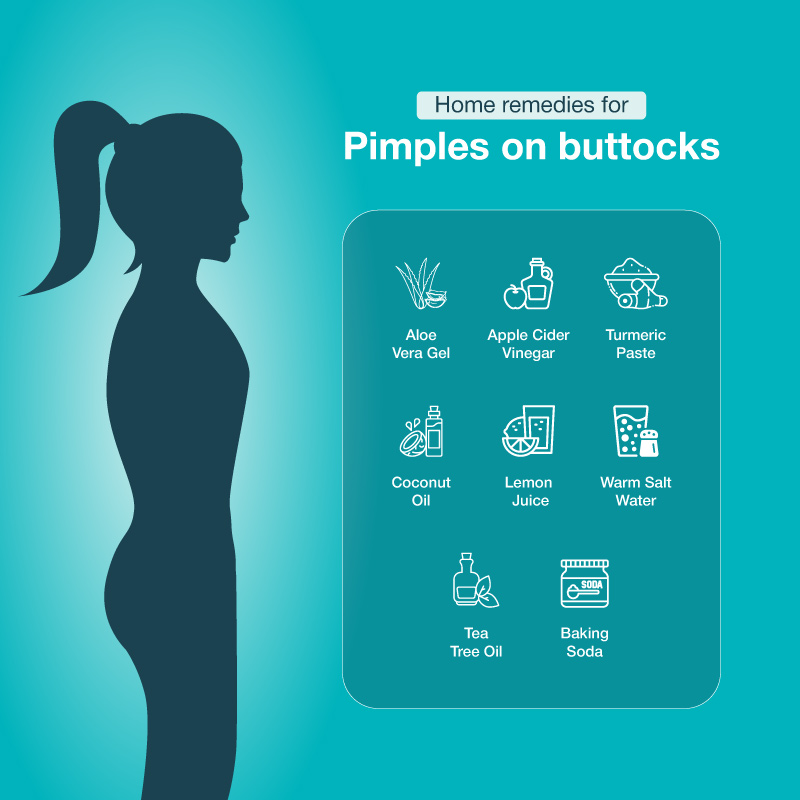
10 Best Home Remedies for Pimples on Buttocks


Many people experience small red bumps, painful acne, or itchy spots on their buttocks at some point in life. While it may feel embarrassing to talk about, this condition is extremely common and usually harmless. Sweat, friction, tight clothing, and clogged hair follicles often trigger these breakouts. The good news is that several safe, natural, and effective pimples on buttocks home remedies can help soothe irritation, reduce inflammation, and speed up healing. In this guide, you will learn what causes butt acne, how to treat it at home, lifestyle changes to prevent it, and when medical help is needed.
In This Article
What Are Pimples on Buttocks?
Pimples on the buttocks are small inflamed bumps that appear due to clogged pores, bacterial growth, or irritation of hair follicles. In most cases, these bumps are not true acne but a condition called folliculitis — inflammation of hair follicles caused by sweat, bacteria, or friction.
These bumps may appear as:
- Red pimples
- Whiteheads filled with pus
- Itchy bumps or rash-like spots
- Painful swollen lumps
Many people search for how to treat pimples on buttocks because these bumps can be uncomfortable, itchy, or painful when sitting or walking.
Causes of Pimples on Buttocks
Understanding the root cause helps you choose the right home remedies pimples on buttocks treatment. Common causes include:
1. Sweat and Heat
Sweat trapped in tight clothing creates a warm environment for bacteria to grow. This is one of the main reasons people develop acne on the buttocks home remedies searches after workouts or long travel.
2. Tight Clothing and Friction
Skin rubbing against tight jeans, leggings, or synthetic fabrics irritates hair follicles and leads to inflammation.
3. Poor Hygiene After Sweating
Not showering after gym sessions or hot weather allows bacteria to remain on the skin, increasing breakouts.
4. Hair Follicle Infections (Folliculitis)
Bacterial infection of hair follicles causes red, pus-filled bumps that resemble acne.
5. Dry or Irritated Skin
Harsh soaps and chemical products strip natural oils and trigger inflammation.
6. Sitting for Long Hours
Prolonged sitting traps heat and moisture, increasing risk of bumps.
These factors explain why many people also search for itchy bumps on buttocks home remedies or pimples on hips home remedies.
Best Home Remedies for Pimples on Buttocks
Mild butt acne is commonly caused by clogged pores, trapped sweat, friction from tight clothing, or bacterial infection of hair follicles. Using the right natural treatments can help reduce inflammation, fight bacteria, unclog pores, and support faster healing. Below are effective home remedies for butt acne along with how they work and how to use them safely.
1. Aloe Vera Gel
Aloe vera helps soothe irritated skin, reduce redness, and promote healing due to its anti-inflammatory and antibacterial properties.
How to use: Apply fresh aloe vera gel directly to the butt acne after bathing. Leave it on for 20–30 minutes or overnight. Use daily for best results.
2. Tea Tree Oil
Tea tree oil is a natural antimicrobial treatment that targets acne-causing bacteria and reduces swelling in inflamed butt pimples.
How to use: Dilute 2–3 drops in a teaspoon of carrier oil such as coconut oil. Apply gently using cotton once daily. Avoid using it undiluted.
3. Apple Cider Vinegar
Apple cider vinegar helps restore the skin’s pH balance and prevents bacterial growth that can worsen butt acne. It also removes dead skin buildup.
How to use: Mix equal parts vinegar and water, apply with a cotton pad for 10 minutes, then rinse. Use once daily.
4.Turmeric Paste
Turmeric contains curcumin, which has strong antibacterial and anti-inflammatory effects that help calm swollen butt acne and prevent infection spread.
How to use: Mix turmeric with water or honey to form a paste. Apply for 10–15 minutes, then rinse. Use 3–4 times weekly.
5. Baking Soda
Baking soda acts as a mild exfoliant that removes dead skin cells and helps unclog pores that contribute to butt acne.
How to use: Mix a small amount with water to form a paste. Apply gently for 1–2 minutes, then rinse. Use only once weekly to avoid dryness.
6. Coconut Oil
Coconut oil contains lauric acid with antibacterial properties and helps moisturize skin, preventing dryness and friction that can trigger butt acne.
How to use: Apply a thin layer to clean skin before bed and leave overnight. Use daily if skin feels dry or irritated.
7. Lemon Juice
Lemon juice has antibacterial and pore-tightening effects that help dry out butt pimples and reduce marks.
How to use: Always dilute with water, apply for 5–10 minutes, then rinse. Use 2–3 times weekly and avoid on sensitive or broken skin.
8. Witch Hazel
Witch hazel is a natural astringent that reduces inflammation, tightens pores, and controls excess oil that can worsen butt acne.
How to use: Apply using a cotton pad after showering. Let it dry naturally. Use once daily.
9. Warm Salt Water
Salt water helps cleanse pores, reduce bacteria, and dry inflamed butt acne, supporting faster healing.
How to use: Dissolve half a teaspoon of salt in warm water. Dab gently using a clean cloth and let it air dry. Use once daily.
10. Epsom Salt Bath
An Epsom salt bath helps draw out impurities, reduce swelling, and relieve discomfort caused by inflamed butt acne.
How to use: Add one cup of Epsom salt to a warm bath and soak for 15–20 minutes. Repeat 2–3 times weekly.
Lifestyle Tips to Prevent Butt Pimples
Treatment alone is not enough. Prevention is key if you want long-term relief from pimples on buttocks home remedies.
Wear Breathable Fabrics
Choose cotton underwear and loose clothing to reduce friction.
Shower After Sweating
Always shower after workouts to remove bacteria and sweat.
Exfoliate Gently
Use mild scrub once or twice weekly to prevent clogged pores.
Change Clothes Quickly
Avoid sitting in sweaty clothes for long periods.
Use Antibacterial Soap
Mild antibacterial cleansers help prevent follicle infections.
These steps significantly reduce the need to search how to treat pimples on buttocks repeatedly.
What to Avoid With Butt Acne?
Certain habits worsen the condition and delay healing.
Avoid:
- Tight synthetic clothing
- Sitting in sweaty clothes
- Harsh scrubs or chemicals
- Picking or popping pimples
- Using oily lotions
Popping pimples spreads infection deeper into skin and can cause scarring.
When to See a Dermatologist?
While most cases respond to home remedies to cure pimples on buttocks, medical care is needed if:
- Pimples are very painful
- You see large boils or cysts
- Breakouts keep returning
- There is fever or spreading redness
- No improvement after 2–3 weeks
A dermatologist may prescribe antibiotics, medicated cleansers, or anti-inflammatory creams.
Takeaway
Butt pimples are common and usually harmless, but they can cause discomfort and embarrassment. The right hygiene habits, breathable clothing, and simple pimples on buttocks home remedies can clear most cases naturally. However, if symptoms persist, worsen, or become painful, seeking help from a qualified dermatologist is important, as professional treatment ensures faster healing and prevents scarring. If your symptoms are not improving, don’t hesitate to book an appointment with a skin specialist for proper evaluation and personalized treatment. Remember, consistent care, prevention habits, and timely medical advice are the best solutions for maintaining healthy, bump-free skin.
Frequently Asked Questions Home Remedies for Pimples on Buttocks
Keep the area clean and dry, wear loose cotton clothing, and apply antibacterial treatments like tea tree oil or salicylic acid to reduce inflammation quickly. Avoid tight clothes and sweating for long periods, and don’t pick the pimples to prevent infection and scarring.
They are usually caused by sweat, friction, clogged pores, or infected hair follicles.
Most are folliculitis, not true acne, but both look similar.
Mild bumps heal within 3–10 days with proper care.
Yes, trapped sweat promotes bacterial growth and clogged pores.
Yes, it moisturizes and reduces inflammation for mild cases.
No, popping spreads infection and causes scars.
Yes, friction and lack of airflow increase breakouts.
Not always. Even clean individuals can develop folliculitis.
Use mild antibacterial or salicylic-based cleansers.