

 Facts Checked
Paneer Benefits: Nutrition, Weight Loss, Protein & Easy Recipes


Paneer, also known as Indian cottage cheese, is one of the most popular vegetarian protein sources in Indian diets. From fitness enthusiasts to people aiming for healthy weight loss, paneer has become a staple food. Understanding paneer benefits, especially its role in weight loss, digestion, and daily nutrition, can help you include it smartly in your meals.
In This Article
Paneer Is Rich In Essential Nutrients
Paneer is rich in:
- High-quality protein
- Calcium for strong bones
- Healthy fats that support satiety
- Phosphorus and magnesium
- Fat-soluble vitamins like A and D (in full-fat paneer)
Because paneer is minimally processed and free from preservatives, it is considered a clean and wholesome food option.
Nutritional Value of Paneer Per 100 g
The table below highlights the nutritional value of paneer per 100 g, showing its calorie content, protein levels, healthy fats, and essential minerals that support weight loss and overall health.
| Nutrient | Amount per 100 g |
| Calories | 318 kcal |
| Protein | 21 g |
| Total Fat | 24.7 g |
| Saturated Fat | 14 g |
| Carbohydrates | 3.5 g |
| Sugars | 2.8 g |
| Fibre | 0 g |
| Calcium | 710 mg |
| Sodium | 18–916 mg (varies by brand) |
| Cholesterol | 84–89 mg |
Paneer for Weight Loss: Is Paneer Good for Weight Loss?
Yes, paneer is good for weight loss when eaten in the right quantity and prepared healthily. Despite the common belief that paneer leads to weight gain, nutrition science shows that paneer for weight loss can be highly effective due to its high protein content and slow digestion rate.
Why Paneer Supports Weight Loss
-
High Protein, Low Carb Profile
Paneer is rich in high-quality protein and naturally low in carbohydrates. Protein increases satiety, meaning you feel full for a longer time, which helps reduce overall calorie intake. This is one of the key reasons why paneer for weight loss works well in calorie-controlled diets.
-
Boosts Fat Loss While Preserving Muscle
During weight loss, the body may lose muscle along with fat. Paneer helps prevent this because protein supports muscle maintenance. Maintaining muscle mass keeps your metabolism active, helping you burn more calories even at rest.
-
Slow Digestion Prevents Frequent Hunger
Paneer has a longer paneer digestion time (around 3–4 hours). This slow digestion stabilizes blood sugar levels and prevents sudden hunger pangs or cravings, making it easier to stick to a weight loss plan.
-
Thermic Effect of Protein
The body uses more energy to digest protein compared to carbs or fats. This means eating paneer slightly increases calorie burn during digestion, indirectly supporting fat loss.
How Much Protein in Paneer?
One of the most searched questions is how much protein in paneer.
Amount of Protein in Paneer (Approx.)
100 grams paneer: 18–20 grams of protein
50 grams paneer: 9–10 grams of protein
This makes paneer an excellent vegetarian protein source. If you’re wondering is paneer rich in protein, the answer is yes — it provides complete protein with essential amino acids.
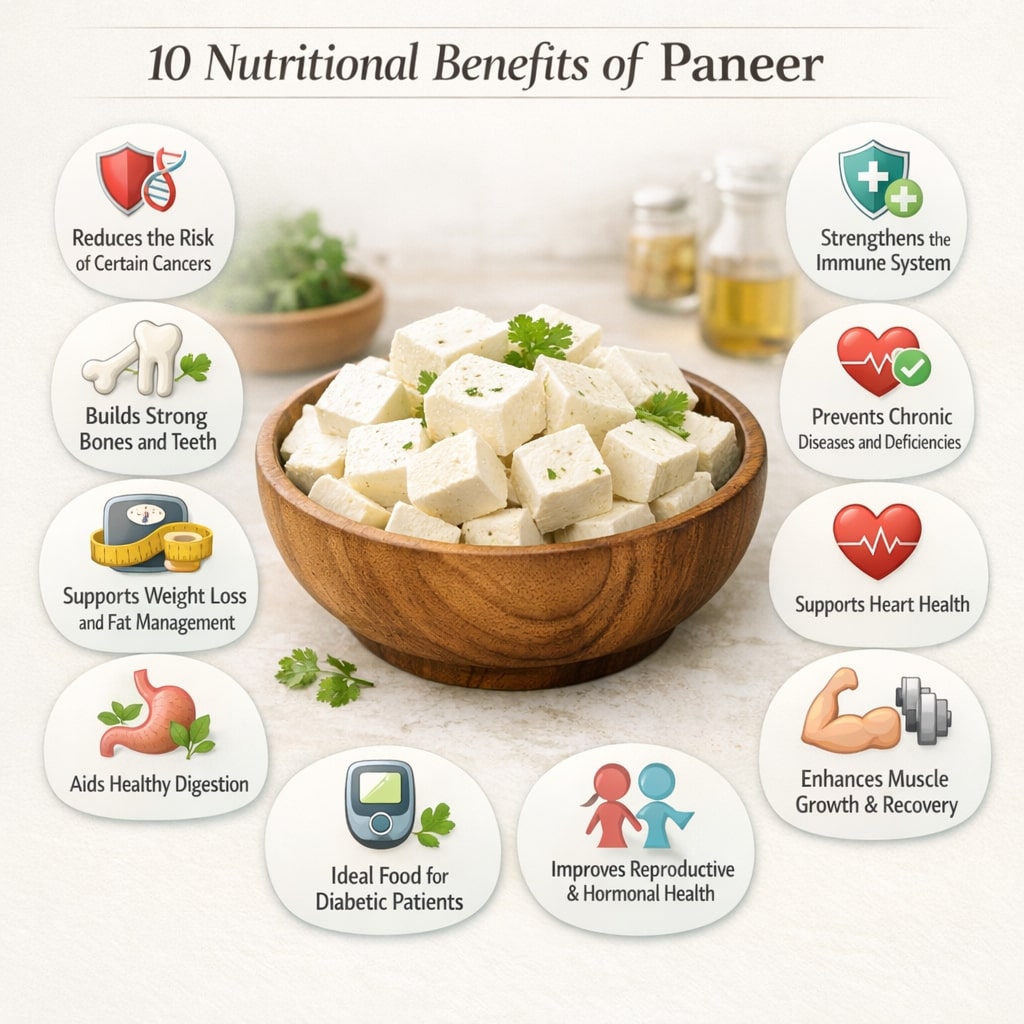
10 Nutritional Benefits of Paneer
Paneer is more than just a tasty dairy product. It is a powerhouse of essential nutrients that support overall health, weight management, and disease prevention. Here are the top 10 scientifically supported nutritional benefits of paneer explained in detail.
1. Reduces the Risk of Certain Cancers
Paneer contains Vitamin D, calcium, high-quality protein, and sphingolipids, all of which play a role in cancer prevention.
- Calcium and Vitamin D are linked to a reduced risk of breast cancer, especially in pre-menopausal women.
- Sphingolipids, naturally present in dairy products like paneer, help regulate cell growth and may inhibit the early development of colon and prostate cancer.
- The high protein content supports cell repair and immune defense mechanisms.
Regular but moderate consumption of paneer may help protect against hormone-related and digestive tract cancers.
2. Builds Strong Bones and Teeth
Paneer is one of the best vegetarian sources of calcium and vitamin D, making it ideal for bone health.
- Calcium strengthens bones and teeth and helps prevent osteoporosis.
- Vitamin D improves calcium absorption in the body.
- Suitable for children, adults, and elderly individuals.
Paneer also supports muscle contraction and nerve signal transmission, making it essential beyond just bone health.
3. Supports Weight Loss and Fat Management
- Contrary to myths, paneer is good for weight loss when eaten in the right form and quantity.
- Contains easily digestible short-chain fatty acids
- High protein increases satiety and reduces overeating
- Low carbohydrate content helps control insulin spikes
This makes paneer an excellent food choice in weight loss programs and fitness diets.
4. Aids Healthy Digestion
Paneer supports the digestive system due to its mineral profile.
- Magnesium acts as a natural laxative and prevents constipation
- Phosphorus aids digestion and proper bowel movement
- Gentle on the stomach when fresh and properly cooked
Paneer helps maintain smooth digestion and nutrient absorption.
5. Ideal Food for Diabetic Patients
Paneer is one of the safest dairy foods for people with diabetes.
- Low carbohydrate content
- Rich in magnesium, which helps regulate blood sugar levels
- Prevents sudden spikes and drops in glucose levels
Diabetic patients can safely include paneer in controlled portions without fear of blood sugar imbalance.
6.Strengthens the Immune System
Paneer contributes to a stronger immune system, especially in children and growing individuals.
- Promotes hemoglobin production
- Rich in Vitamin B-complex, essential for immune function
- Helps prevent respiratory conditions like asthma and bronchitis
Regular intake improves resistance to infections and enhances overall vitality.
7. Prevents Chronic Diseases and Deficiencies
- Paneer helps protect against several long-term health issues.
- Potassium maintains healthy blood pressure and reduces stroke risk
- Helps prevent muscle cramps by maintaining electrolyte balance
- High calcium levels help prevent osteoporosis
Particularly beneficial for elderly individuals and athletes.
8. Supports Heart Health
When consumed in moderation, paneer can support cardiovascular health.
- Potassium helps regulate blood pressure
- Protein supports healthy cholesterol balance
- Low sodium (in fresh or homemade paneer) reduces heart strain
Choose low-fat paneer for heart-friendly benefits.
9. Enhances Muscle Growth and Recovery
Paneer is rich in complete protein, making it ideal for muscle health.
- Supports muscle repair and growth
- Prevents muscle loss during weight loss
- Ideal post-workout vegetarian protein source
Athletes and gym-goers benefit greatly from paneer consumption.
10. Improves Reproductive and Hormonal Health
Paneer provides essential micronutrients that support reproductive health.
- Zinc helps maintain normal sperm count and fertility in men
- Calcium and magnesium help regulate hormonal balance in women
- Reduces muscle cramps during menopause
Paneer supports both male and female reproductive health naturally.
Paneer Salad Recipe (Perfect for Weight Loss)
A paneer salad for weight loss is one of the easiest and healthiest ways to include paneer in your diet. It is rich in protein, low in carbohydrates, and keeps you full for longer, helping reduce unnecessary snacking.
Why Paneer Salad Is Good for Weight Loss
- High protein boosts satiety
- Low carbs support fat loss
- Raw paneer is easy to digest
- Helps preserve muscle during weight loss
Healthy Paneer Salad Recipe
Ingredients
- 100 g raw paneer (low-fat preferred), cubed
- 1 cucumber, chopped
- 1 tomato, chopped
- ½ onion, finely sliced (optional)
- Lemon juice (1 tablespoon)
- Black pepper powder (to taste)
- Rock salt or low-sodium salt (to taste)
- Fresh coriander leaves (optional)
How to Prepare (5-Minute Recipe)
- Add paneer cubes to a bowl.
- Mix in chopped vegetables.
- Sprinkle black pepper and salt.
- Add lemon juice and toss well.
- Garnish with coriander and serve fresh.
Preparation time: 5 minutes
Nutritional Benefits of Paneer Salad
- High protein: Supports fat loss and muscle retention
- Low calorie: Ideal for calorie-deficit diets
- Rich in calcium: Supports bone health
- Good digestion: Fresh paneer is gentle on the stomach
Best Time to Eat Paneer Salad for Weight Loss
- Lunch for prolonged fullness
- Early dinner with vegetables
- Post-workout for muscle recovery
Tips to Make It More Weight-Loss Friendly
- Use low-fat paneer
- Avoid mayonnaise or cream-based dressings
- Add leafy greens like lettuce or spinach
- Avoid eating late at night
A paneer salad recipe for weight loss is a simple, nutritious, and protein-rich meal that supports fat loss without compromising health. When prepared with fresh ingredients and eaten in moderation, it can be an effective addition to any weight loss diet.
How to Include Paneer in Your Diet?
Including paneer in your daily meals is easy, versatile, and highly beneficial for health and weight management.
- Add paneer to curries or stir-fries:
Mix cubed paneer into vegetable-rich curries or stir-fries to increase paneer protein, calcium intake, and satiety while keeping meals wholesome and balanced.
- Grill or pan-sear paneer for healthy meals:
Grilled or lightly pan-seared paneer pairs well with whole grains and legumes, creating a high-protein, filling meal ideal for weight loss and muscle health.
- Enhance salads with paneer:
Combine raw or grilled paneer with leafy greens, colorful vegetables, and light dressings to prepare a nutrient-dense paneer salad for weight loss.
- Swap refined carbs with paneer:
Replace a portion of rice, pasta, bread, or wraps with paneer in lunch plates or grain bowls to improve fullness, reduce calorie spikes, and enhance overall nutrition quality.
- Check tolerance and portion size:
If you are lactose sensitive, start with small portions. Paneer is generally lower in lactose than milk and is easier to digest for most people.
Takeaway
Paneer is a powerful vegetarian superfood. From paneer benefits like high protein and bone strength to its proven role in paneer for weight loss, it deserves a place in your daily diet. Whether you enjoy it raw, grilled, or in a paneer salad for weight loss, paneer offers flexibility, nutrition, and satiety all essential for sustainable health. Book an appointment with our nutrition expert today and get a customized plan for healthy, sustainable weight loss.
Frequently Asked Questions On Paneer Benefits
you can eat paneer daily as part of a balanced diet, provided it is consumed in the right quantity and prepared healthily. Paneer is rich in high-quality protein, calcium, and essential nutrients, which support muscle health, bone strength, and overall nutrition. Eating paneer every day can also help with weight management, as its high protein content keeps you full for longer and reduces unhealthy snacking.
-
50–100 grams per day is ideal for most people
-
Choose low-fat or homemade paneer if your goal is weight loss
-
Prefer grilled, raw, or lightly cooked paneer over fried versions
People with lactose intolerance, digestive issues, or high cholesterol should limit intake and monitor tolerance.
Yes, paneer is easy to digest for most people, especially when it is fresh and homemade. Its soft texture and protein content support smooth digestion when eaten in moderate portions.
Paneer may cause gas in some people due to lactose sensitivity or overeating. Eating paneer late at night or in fried form can also lead to bloating.
Choose fresh or homemade paneer, eat small portions, and avoid deep-frying. Adding digestive spices like cumin or black pepper can also reduce gas.
Paneer is neutral to slightly warm in nature and does not cause excess body heat when consumed moderately. Pairing it with vegetables or salads balances its effect.
Yes, paneer can be eaten raw if it is fresh and hygienically prepared. Raw paneer is commonly used in salads and quick meals.
Yes, raw paneer is good for health as it retains maximum nutrients and is easy to digest. It is especially beneficial for weight loss and muscle health.
Yes, paneer tikka is healthy for weight loss when grilled or air-fried. It is high in protein, low in carbs, and helps keep you full for longer.
Eating paneer in excess may lead to weight gain due to its calorie and fat content. Full-fat paneer can raise cholesterol if overconsumed, and it may cause gas or bloating in people with lactose sensitivity. Moderation and fresh or low-fat paneer are recommended.
To maximize protein intake, eat 50–100 g of paneer daily, either raw, grilled, or lightly sautéed. Pair it with vegetables, salads, or whole grains to make a high-protein, balanced meal. Avoid deep-fried or cream-heavy dishes to keep it healthy and protein-focused.