
 Laser Hair Reduction
 Hair Re-Growth
 Acne / Scar
 Skin Rejuvenation
 Insta Glow Solutions
 Pigmentation
 Anti-Aging
 More
More Body
Body
 Facts Checked
Vitamin B3 for Skin: Benefits and Side Effects


Are you noticing pigmentation, dark spots, acne, wrinkles or uneven skin tone? Have you ever considered that your skin might need vitamin B3, a potent vitamin? One of the most popular ingredients in skincare products, vitamin B3 is an essential vitamin of the B-complex family. From skin brightening and acne control to anti-ageing benefits, vitamin B3 helps improve your skin’s metabolism and cellular renewal. Let’s explore vitamin B3 uses for skin, its common sources, and the most effective skincare forms.
In This Article
What Is Vitamin B3?
Vitamin B3 (or niacin) is a water-soluble B vitamin that plays a vital role in cellular metabolism, supporting enzyme function, and maintaining skin health [1]. It exists mainly in two forms, namely, nicotinic acid and nicotinamide.
How Does Vitamin B3 Work For Skin?
Vitamin B3, typically in the form of niacinamide, helps keep the skin plump and hydrated by increasing ceramide synthesis. Since it is a water-soluble vitamin, it is readily absorbed by the skin when applied topically. It primarily helps in making your skin more resilient to environmental stress and damage, reducing pigmentation, and improving skin elasticity, among other benefits.
What Are The Top Benefits Of Vitamin B3 For Skin?
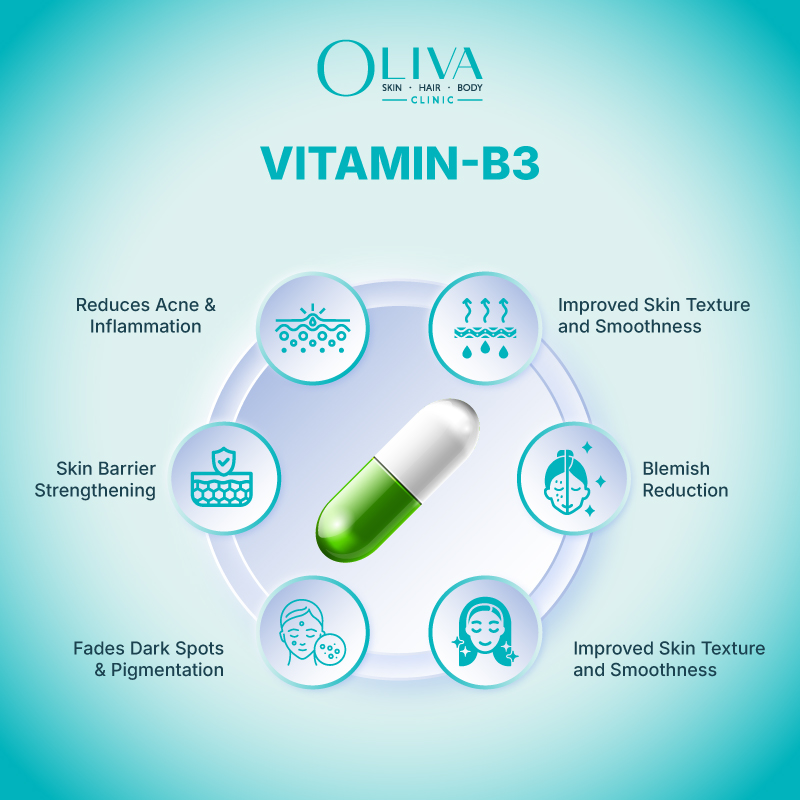
There are several benefits of using vitamin B3 for skin:
- Reduces Inflammation: The anti-inflammatory nature of vitamin B3 provides a calming effect on irritated skin, especially caused by breakouts.
- Fades Dark Spots and Pigmentation: Vitamin B3 stops melanin from coming to the skin’s surface, hence reducing the appearance of pigmentation and dark spots.
- Strengthens Skin Barrier: By encouraging ceramide production, vitamin B3 prevents water loss and boosts skin’s moisture-retaining ability. This significantly improves the skin’s natural barrier.
- Enhances Skin Elasticity and Anti-Ageing Effects: By increasing collagen production, reducing oxidative stress, and maintaining the skin’s structural integrity, vitamin B3 can provide notable anti-ageing benefits.
- Improves Skin Texture and Smoothness: Vitamin B3 tightens pores, regulates sebum production, and promotes cell turnover, improving overall skin texture.
- Enhances Skin Brightening and Radiance: You can use Vitamin B3 for skin whitening because of its brightening properties. By reducing melanin production, vitamin B3 can help enhance skin’s radiance.
- Reduces Acne and Blemishes: Niacin’s antibacterial properties make it effective in fighting acne-causing bacteria. It also reduces excess oil production and unclogs pores, preventing new breakouts. Its brightening effect can visibly reduce post-acne hyperpigmentation.
Other general benefits of vitamin B3 include:
- Energy Production: Niacin plays an important role in biochemical reactions and cell metabolism. It helps break down proteins, carbohydrates, and fats into glucose to produce energy. Vitamin B3 is extremely effective in reducing fatigue and keeping the body active.
- Heart Health: Vitamin B3 is beneficial for cardiovascular health. It helps balance cholesterol levels, reducing the risk of cardiovascular diseases [2].
- Digestive Health: Niacin promotes healthy gut function by promoting mucous membrane’s integrity and reducing inflammation.
Best Sources Of Food For Vitamin B3
- Beef: Ground beef is rich in niacin, B12, protein, iron and zinc.
- Poultry: Poultry like chicken and turkey have high amounts of tryptophan, which is an amino acid that gets converted to niacin in our bodies.
- Marinara Sauce: This is a significant source of vitamin B3, providing up to 50% of the recommended quantity.
- Fish: Fish, such as anchovies and tuna, are an excellent source of niacin. Tuna can provide over 100% of the required B3 value, while a single anchovy contains 5% of the recommended dose of niacin.
- Brown Rice: Brown rice is high in fibre and niacin content, among other vitamins and minerals. A cup of brown rice provides about 18%-21% of the recommended dietary value for men and women.
- Peanuts: One of the best non-meat sources of niacin, 32 grams of peanuts contain about 4.3 mg of niacin.
- Fortified Breakfast Cereals: Many breakfast cereals are enriched with niacin to improve their nutrient value.
- Potatoes: White and sweet potatoes are a great source of niacin, with an average-sized potato accounting for nearly 25%-30% of the recommended dietary value for men and women.
How To Use Vitamin B3 In Your Skincare Routine?
Vitamin B3, specifically in the form of niacinamide, is a popular ingredient in many skincare products. You can incorporate it into your skincare regimen as a serum, cleanser, moisturiser or night cream.
- Serum: Serums are high-concentration skincare products that can provide maximum vitamin B3 benefits for skin due to deep penetration. Including a 10% niacinamide serum in your AM and PM routines can lead enhance sun protection, brighten your complexion, and refine your overall skin texture.
- Cleanser: Niacinamide cleansers can be a good choice if you are looking to reduce blemishes and acne marks. They are gentle on the skin and do not strip it of its natural moisture, while unclogging pores and eliminating excess oil.
- Moisturiser or Night Cream: Moisturisers and night creams containing niacinamide can be a simple yet effective way of locking in moisture and giving your skin the pampering it needs. Add this as the last step to your AM or PM routine for maximum benefits.
How Much Vitamin B3 Should I Take Every Day?
The recommended daily dose of vitamin B3 is as follows [3]:
| Group | Daily Dose Values (mg) |
| Adults | 13-20 |
| Pregnant Persons | 17 |
| Lactating Individuals | 20 |
| Children | 9-13 |
| Infants | 5-6 |
What Are the Side Effects Of Vitamin B3
Vitamin B3 is usually considered safe for topical application. However, it may trigger histamine production in people with pre-existing allergies and cause hypersensitivity. Other side effects may include itching, redness, swelling or discolouration. It is advised that you perform a patch test at least 48 hours before application.
When To Consult Dermatologists
If you experience any allergic reaction, discontinue use immediately and consult a dermatologist. Additionally, if you do not notice the desired results after 2-3 weeks of regular use, an expert can help tailor an effective treatment plan that best suits your skin’s unique requirements.
Takeaway
An important nutrient in the B vitamin complex, vitamin B3 is essential for proper cell metabolism and optimal skin health. Found mainly in poultry, fish, and eggs, this water-soluble vitamin is a popular ingredient in many skincare products. Its role in maintaining hydration, boosting cell turnover, and fighting oxidative stress makes it effective in repairing the skin barrier, enhancing skin protection against harmful UV rays and improving skin elasticity. Its most popular form, niacinamide, is widely available in highly concentrated serum form, and is known to brighten skin, treat acne, and even out skin tone. It is always best to patch-test before topical application and consult an expert for specific and targeted use. Dermatologists at Oliva specialise in advanced clinical skin treatments, tailored to individual needs. Book your consultation today!
Frequently Asked Questions On Vitamin B3 for Skin
Yes, vitamin B3, specifically in the form of Niacinamide, can be very beneficial for acne-prone skin. It is known to regulate sebum production, reduce acne scars and inflammation, and treat acne while maintaining the skin’s healthy barrier.
Vitamin B3 is generally well-tolerated and not harsh on the skin. It can be applied daily after cleansing.
Yes, vitamin B3 is considered suitable for all skin types. Its natural lipids can provide deep hydration to dry skin types. It can also help people with sensitive skin calm inflammation and reduce excess oil production in oily skin types.
Niacinamide does not lighten your natural skin tone. However, it helps reduce pigmentation, dark spots, and uneven skin tone, and makes your skin appear brighter and more radiant over time.
Read This Next
Chemical Peel Treatment In Kolkata: Cost, Results & Procedure
Get Glowing Skin with Korean Rice Water: Ultimate Guide to Benefits and Uses
Chemical Peel for Hyperpigmentation: Types, Cost, Benefits & Results
Best Ways To Get Rid Of Pigmentation On Face
Medifacials In Hyderabad: Cost, Results, Benefits & Procedure