
 Laser Hair Reduction
 Hair Re-Growth
 Acne / Scar
 Skin Rejuvenation
 Insta Glow Solutions
 Pigmentation
 Anti-Aging
 More
More Body
Body
 Facts Checked
Chemical Peel for Hyperpigmentation: Types, Cost, Benefits & Results


In This Article
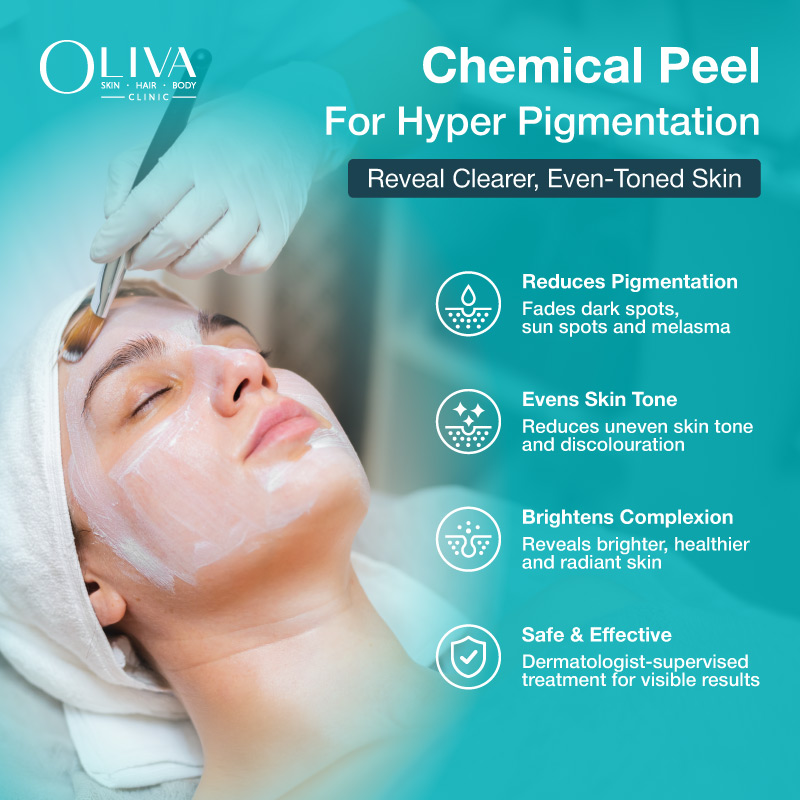
Are you noticing discoloured patches or spots on your skin? Are some areas of your skin darker than the surrounding skin? It is likely that you have hyperpigmentation. While there is nothing to feel panic about, you need a scientifically backed solution to treat this. Chemical peels have emerged as the popular option for hyperpigmentation for their amazing results, with many opting for them. If you are someone who has tried chemical peel for hyperpigmentation before or is planning to try it for the first time, this article is for you.
In this ultimate guide, we will take you through the different types of chemical peels for hyperpigmentation, how they work and their multiple benefits. To make the decision-making process easier for you, we will also talk about who should and should not get chemical peels. Before that, let us understand what hyperpigmentation is.
What Is Hyperpigmentation?
Hyperpigmentation [1] is a common skin concern often characterised as skin discolouration where certain areas appear darker than the surrounding skin. While the primary cause for hyperpigmentation is excess melanin production, several other factors trigger the overproduction of the pigment. These include sun exposure, hormonal changes (melasma), post-inflammatory hyperpigmentation (PIH), ageing, environmental damage and skin inflammation after injury.
How May Types Of Chemical Peels For Hyperpigmentation?
Chemical peels for hyperpigmentation are available in various types based on their strengths [2] and the concerns they treat. Not every peel is created equal. Hence, it is essential to choose the right peel in the right concentration based on the type of concern and its severity, skin type, and the desired results. Here are some common types of chemical peels for hyperpigmentation often recommended by dermatologists:
Glycolic Acid Peel: This is a common AHA [3] (alpha hydroxy acid) peel that reaches the medium depths of the skin. They are effective for mild pigmentation.
Salicylic Acid Peel: Salicylic acid [4] peel is a BHA (beta hydroxy acid) peel that works best for hyperpigmentation that occurs post-acne and marks associated with other skin conditions.
Lactic Acid Peel: This is yet another AHA peel, just like the glycolic acid peel, which the dermatologists may recommend for superficial conditions like sun damage, age spots, fine lines and wrinkles. Lactic acid [5] peels are ideal for people with sensitive skin types who have uneven skin tone.
TCA Peel: Trichloroacetic acid [6] (TCA) peel is a medium-depth peel often recommended by dermatologists for treating concerns like melasma, age spots, freckles, acne scars, sun damage, fine lines and wrinkles. These are one of the strongest chemical peels.
Here is a classification of peels based on the depth of penetration:
| Peel | Penetration | Ideal For | Downtime | Recovery Time | Key Agents |
| Superficial Peels | Epidermis, or the outermost layer of the skin | Mild pigmentation, uneven skin tone, enlarged pores, dull skin, mild acne and early signs of ageing | Minimal to no downtime | 1 to 7 days | AHAs like glycolic acid and lactic acid. BHAs like salicylic acid |
| Medium-depth Peels | Upper dermis | Age spots, sun damage, fine lines and wrinkles, and moderate acne | Minimal downtime | 7 to 14 days | TCA or Jessner’s solution |
| Deep Peels | Lower dermis | Severe sun damage, deep wrinkles and signs of ageing | Significant downtime | 2 to 3 weeks | Phenol |
How Chemical Peels Treat Hyperpigmentation?
Chemical peels work by exfoliating the top or damaged layers of the skin, revealing fresh skin underneath. The controlled acids used in chemical peels remove the pigmented cells, stimulate new cell turnover, and encourage collagen production, giving a clearer and more uniform skin tone and texture.
Benefits of Chemical Peel Treatment?
Chemical peel treatment is a non-invasive skin rejuvenation treatment with minimal downtime. Here is a rundown of the several benefits of a chemical peel for hyperpigmentation:
Reduces Dark Spots and Blemishes: The controlled exfoliation removes the damaged layers containing pigment. With gradual sessions, the dark spots and blemishes lighten.
Brightens Skin Tone: Chemical peels help you achieve a uniform skin tone, brighter complexion, and a healthy glow by removing dead skin cells and stimulating new cell turnover.
Acne Scars: Chemical peels remove dead skin cells on surface and stimulate collagen production, which helps reduce the appearance of acne scars.
Improves Skin Smoothness: Another significant benefit of chemical peels is their ability to improve your skin’s texture. With gradual sessions, your skin feels softer and smoother.
Who Can & Can’t Get Chemical Peels For Hyperpigmentation?
Chemical peels are generally suitable for people with skin concerns like uneven skin tone, sun damage, and acne scars. Individuals with highly sensitive skin, active skin infections, abnormal scarring issues, open wounds, and darker skin tone or complexions are not ideal candidates for chemical peels. Also, pregnant women and lactating mothers should refrain from taking this treatment.
A consultation with an expert will determine whether you are a suitable candidate or not. At Oliva, our board-certified dermatologists review your medical history and assess your skin condition to determine if you are the right candidate. To know if you can get a chemical peel treatment done, schedule an appointment with our specialist today!
How To Prepare For A Chemical Peel For Hyperpigmentation?
During your consultation, our dermatologist will decide if you need a chemical peel for hyperpigmentation or not. If they recommend chemical peels for you, they will also give you a set of pre-treatment guidelines to follow as preparation for the treatment. These include:
- Stop using retinols, skin lightening creams and AHAs five days prior to the treatment.
- Stop taking certain medications that can interfere with the treatment.
- Apply the doctor-recommended moisturisers and sunscreens.
Chemical Peel Procedure At Oliva Clinics
On the day of treatment, the medical team will cleanse your skin thoroughly to prepare it for the treatment. Our expert dermatologist at Oliva will customise the concentration of the peel based on your skin tone, type, concern and severity. They will first perform a patch to see how your skin reacts. Then, they will apply the peel evenly on the targeted area using a specialised brush and remove it after an appointed time. They will apply a cold compress after the procedure to alleviate any discomfort. After this, they will apply a moisturiser and a sunscreen to protect your skin. They will give you post-care instructions before you leave.
Aftercare & Recovery
Following the post-care guidelines diligently will help optimise the results.
- Apply a sunscreen daily, whether indoors or outdoors.
- Keep your skin moisturised by applying a moisturiser regularly.
- Avoid picking or peeling the skin.
- Avoid direct heat and sun exposure.
- Follow the skincare routine prescribed by your dermatologist.
- Complete the recommended number of sessions.
How Many Chemical Peels Do You Need for Hyperpigmentation?
The number of chemical peels one needs for hyperpigmentation varies from person to person, depending on their skin type, concern and its severity and how they respond to the treatment. On average, dermatologists generally recommend 6 to 8 sessions of chemical peels for the best results.
Chemical Peels For Hyperpigmentation Risks
There are no major risks associated with chemical peels, especially when performed by expert dermatologists at a reputable clinic. However, individuals may experience minor side effects, which include:
• Temporary redness and irritation
• Dryness and peeling
• Increased sensitivity to the sun
• Post-inflammatory hyperpigmentation
• Uneven results (When postcare is ignored)
Tips to Maintain Chemical Peel Results
While it is important to achieve the best results, it is also crucial to maintain them. Here are some useful tips to follow in between the sessions and post-sessions that will help you improve and maintain your results:
• Follow a proper skincare routine without fail.
• Your skin might become dry after the sessions. Moisturise your skin daily to maintain hydration by using a gentle moisturiser.
• Your skin will become sensitive to the sun after the treatment. Always protect your skin from the sun’s harsh rays by applying a broad-spectrum SPF.
• Make some lifestyle adjustments, like avoiding smoking or alcohol, to accelerate your skin’s healing.
• Do not skip your follow-up or maintenance sessions to keep up the results.
What Is The Cost Of Chemical Peels In India?
The chemical peel cost in India varies for individuals. Several factors determine the cost of chemical peels, such as the concern, its severity, the size of the target area, the number of sessions, the expertise of the dermatologist, and the geographical location of the clinic. For an accurate estimate of the price, book a consultation at your nearest Oliva clinic today.
Why Choose Oliva Clinics?
If you are looking for a clinic offering the best chemical peel for hyperpigmentation, Oliva Clinics is the place to go. Here are the top reasons why Oliva is the preferred choice for many:
• Oliva has the largest team of expert MD dermatologists who specialise in customised treatments for your skin concerns.
• Our unique 5-step consultation protocol, V Discover, helps identify your skin, hair and body care needs.
• At Oliva, our dermatologists offer holistic treatment solutions for every individual by personalising the treatment exclusively for them.
• We ensure transparent pricing throughout the procedure, right from the consultation to the sessions.
• Oliva has the highest client satisfaction rate of 97% across the client base of 8.5 lakh individuals.
Key Points to Remember
Hyperpigmentation is a common skin concern often characterised by skin discolouration in patches due to the overproduction of melanin. Chemical peels are one of the most popular treatments to address hyperpigmentation, which works by exfoliating the damaged layers of the skin to reveal new and healthy skin underneath. It offers several other benefits like improved skin tone and texture, enhanced glow, reduced dark spots and blemishes. Chemical peels for hyperpigmentation are available in various types and concentrations based on the skin type and condition. To know what type of peel you need for your concern, talk to a professional who will determine the right concentration.
FAQs About Chemical Peels and Hyperpigmentation
Yes. Chemical peels are one of the recommended treatment options for hyperpigmentation. They reduce hyperpigmentation by exfoliating damaged skin cells and promoting a brighter complexion and more uniform skin tone.
You may observe mild improvement visible within 1–2 weeks. Noticeable results usually appear after multiple sessions.
Yes. Chemical peels help fade away the dark spots on your skin and improve your overall skin tone and texture. However, you should get them performed by dermatologists at a reputable clinic to make it worth every penny you spend.
The best treatment for hyperpigmentation depends on the type and depth of pigmentation. However, dermatologists commonly recommend chemical peels, laser toning, and prescription creams.
Hyperpigmentation cannot usually disappear in a week. However, with proper skincare and dermatologist-led treatments, you can start noticing an improvement in the appearance.
It usually depends on the severity of pigmentation and the type of peel used. But most people notice a gradual fading of pigmentation within 2 to 6 weeks.
Chemical peels may temporarily worsen your pigmentation if done incorrectly or without proper aftercare. This is especially true in sensitive or sun-exposed skin.
Dermatologists recommend chemical peels every 3–6 weeks, depending on the peel type and your skin concern.