
In This Article
 Facts Checked
Vitamin E For Hair: Benefits, Side Effects, & How to Use


If you are looking for natural ways to improve your hair health, stimulate growth, reduce hair fall, and improve shine, then it is time to try Vitamin E for hair. It is an antioxidant that nourishes the scalp and strengthens the strands. Read till the end to learn about Vitamin E benefits for hair, how to use it for hair growth, who should avoid it, and dermatologist recommended-treatments for hair loss.
In This Article
What Is Vitamin E And Why Is It Essential For Hair?
Vitamin E is a fat-soluble antioxidant which protects the cells from oxidative stress. Oxidative stress is what causes hair breakage, thinning, and slow hair growth. Vitamin E improves scalp circulation, reduces inflammation, balances oil production, and protects the hair from environmental damage. Maintaining the required amount of Vitamin E is essential for strong, healthy hair.
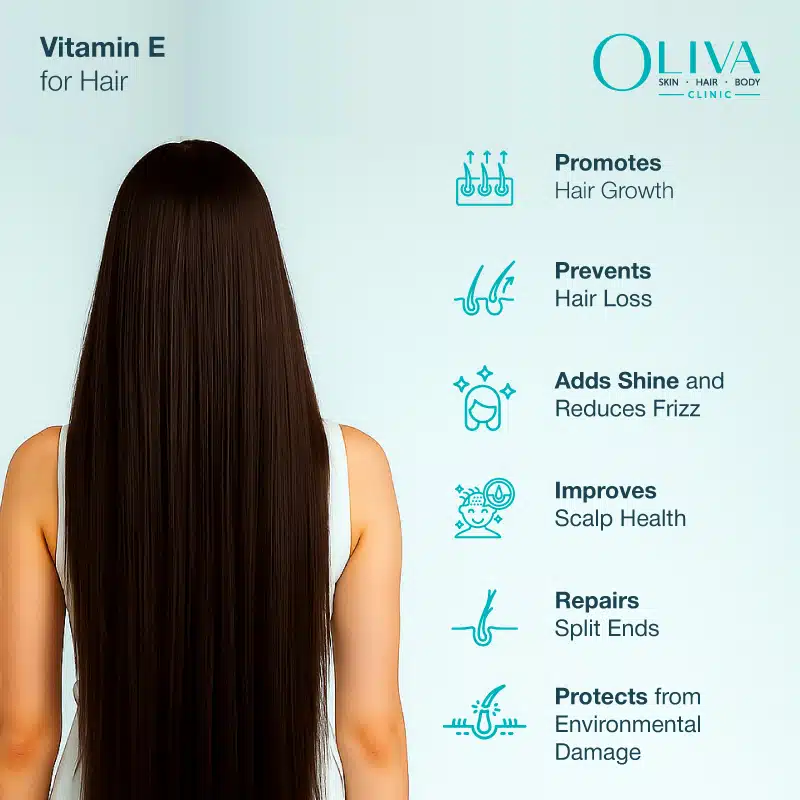
Top Benefits Of Vitamin E For Hair
-
Promotes Hair Growth:
You can benefit from using Vitamin E for hair growth as it improves blood circulation to the scalp, so the hair follicles receive the required amount of oxygen and nutrients.
-
Prevents Hair Loss:
Vitamin E helps reduce hair loss when hair becomes dry and brittle, the scalp is inflamed, and there is a lack of proper circulation. Vitamin E improves scalp health, strengthens follicles, thus reducing breakage and shedding. But note that it doesn’t work if your hair loss is genetic or hormonal. [1]
-
Adds Shine And Reduces Frizz:
Most people use Vitamin E for hair as it smoothens the hair shaft and naturally conditions your hair. It seals moisture, thus reducing frizz and giving your hair a glossy finish. Regular use of Vitamin E oil for hair can reduce dullness and dryness. Make sure you understand your hair type and its requirements before you start using it.
-
Improves Scalp Health:
Vitamin E has moisturising properties that can help reduce scalp inflammation, dryness, and flakiness. If neglected, this condition can lead to dandruff and itchiness. Vitamin E aids in cell renewal and nourishes the scalp.
-
Balances Oil Production:
Vitamin E helps regulate sebum levels, preventing overproduction, so your scalp stays hydrated without being greasy. This improves your overall scalp health.
-
Repairs Split Ends:
As Vitamin E helps in hydration and nourishes the hair, you will notice a reduction in split ends. It prevents your hair from further damage.
-
Protects Hair From Environmental Damage:
Vitamin E also works as a shield against environmental damage like pollution, excessive sun exposure, heat styling, chemical treatments, etc. It helps hair retain moisture and shine.
How To Use Vitamin E For Hair?
There are different ways to use Vitamin E for hair. You can add it to hair oils and consume it orally in the form of supplements or through your diet.
-
Direct Application Of Vitamin E Oil:
You can benefit from Vitamin E Oil for Hair by mixing 2-3 Vitamin E capsules with coconut or almond oil.
How To Use:
- Warm the oil mixture slightly.
- Massage into the scalp for 5–7 minutes.
- Leave for 30 minutes.
- Wash with a mild shampoo.
-
Add It To Your Conditioner:
If you add a few drops of Vitamin E oil to your conditioner, it will increase its moisture content resulting in your hair turning softer and shinier.
-
Try Ready-Made Vitamin E Hair Serums Or Oils
This is the most convenient way to include Vitamin E for hair growth. There are many dermatologist-approved hair serums with Vitamin E that you can apply topically for great results.
DIY Vitamin E Hair Masks (Easy Recipes)
-
Vitamin E + Coconut Oil Mask (For Dry Hair)
- 2 tsp coconut oil
- 1 vitamin E capsule
- Apply from roots to ends, leave for 45 minutes, and rinse with a mild shampoo.
-
Vitamin E + Aloe Vera Gel Mask (For Hair Growth)
- 2 tbsp aloe vera gel
- 1 vitamin E capsule
- Mix, apply to scalp, leave for 30 minutes, wash off with a mild shampoo.
-
Vitamin E + Yoghurt Mask (For Dandruff)
- 2 tbsp curd
- 1 vitamin E capsule
- Apply to scalp for 20–25 minutes.
- Wash it off with a mild shampoo.
-
Vitamin E + Olive Oil Mask (For Frizzy Hair)
- 1 tbsp olive oil
- 1–2 vitamin E capsules
- Apply to lengths and ends, leave for 30 minutes.
- Wash it off with a gentle shampoo.
Getting Vitamin E Through Your Diet
The following list of foods contains Vitamin E. Include them in your meals and notice your skin and hair health improving significantly: [2]
- Almonds: You can have 4-6 soaked or roasted almonds every day for a good dose of Vitamin E and healthy fats.
- Sunflower Seeds: Add them to your salads, smoothies, or snack on them raw.
- Spinach: Add it to curries, dals, salads, or soups.
- Avocado: A versatile source of healthy fat, you can mash it on toast or blend it into a smoothie.
- Peanut Butter: Spread it on your toast or add it to sauces for a protein-rich, Vitamin E-packed addition.
- Olive Oil: Use it to cook your eggs or drizzle it over your toast or salads.
- Broccoli: Simply blanch it, toss it into salads, or make a stir fry with other veggies.
- Fortified Cereals: Choose whole grains instead of processed foods for good hair health.
Vitamin E Capsules And Oils
Most people use Vitamin E capsules in DIY hair masks where they mix it with a carrier oil such as coconut oil or almond oil. You can also benefit from Vitamin E capsules, but it is important to consult a dermatologist before taking them. Note that wrong or excessive dosage can cause side effects. The recommended daily allowance of Vitamin E for adults is about 15mg (22 IU), which is fulfilled with diet. Unsupervised consumption of Vitamin E can cause nausea, diarrhoea, headaches, stomach cramps, fatigue, dizziness, and blurred vision. Serious side effects include the risk of bleeding and haemorrhages. [2] They can also interact with other medications, making them unsafe without a doctor’s supervision.
Potential Side Effects Of Using Vitamin E On Hair
Vitamin E is not harmful, but overuse can make your hair and scalp greasy, cause inflammation, itching or irritation, hair fall, and allergic reactions.
Who Should Avoid Vitamin E Hair Treatments?
People who have an oily scalp, suffer from dandruff or fungal infections, have experienced allergic reactions to cosmetics in the past, have active acne on the scalp or the forehead, and people who notice an increase in hair fall when applying oils, must avoid Vitamin E hair treatments.
It is always better to consult a dermatologist when you notice hair loss, hair thinning, or any hair-related concerns. Note that for severe hair loss, it is crucial that you identify the root cause. For hormonal hair loss, balding, or sudden, severe hair fall, you must consult a dermatologist. Home remedies will only worsen it.
Dermatologist-Recommended Treatments For Hair Fall At Oliva Clinics
At Oliva Clinics, experienced dermatologists offer science-backed solutions delivering long-lasting results for hair loss. Here is a list of the best treatments for hair loss available at Oliva Clinics:
-
PRP For Hair Loss:
PRP Hair treatment uses the client’s blood to extract plasma, activate growth factors, and stimulate dormant hair follicles. Results appear natural and improve with multiple sessions.
-
Oral And Topical Medications:
Dermatologists prescribe topical medications like Minoxidil, oral medications like Finasteride, along with nutritional supplements that support hair growth.
-
Exosomes For Hair:
In this treatment, the dermatologist delivers nano-vesicles that are rich in proteins, peptides, and growth factors into the hair loss areas of the scalp. By repairing damaged hair follicles and reducing inflammation, Exosomes stimulate new hair growth.
-
QR678 NEO:
Using plant-based peptides, QR678 treatment stimulates natural hair growth and restores density. Clients notice a visible improvement in hair volume and density.
-
Hair Threads:
Dermatologists implant bio-absorbable PDO Hair Threads into the hair loss areas of the scalp to stimulate hair growth. This treatment also improves hair density, and doctors usually recommend it when traditional options like PRP prove unsuccessful.
-
Hair Transplantation:
This treatment is effective for advanced baldness where a hair transplant surgeon transfers healthy hair follicles from the donor area, usually the back of the head, to the balding areas. The treatment gives permanent, natural-looking results.
Takeaway
Vitamin E for hair is effective and helps improve hair texture and shine, while supporting hair growth. However, exercise caution when you use it, as it can cause side effects and does not give the same results for everyone. If you are experiencing hair loss or hair thinning, it is always better to consult a dermatologist who can identify and address the root cause.
Frequently Asked Questions On Vitamin E for Hair Growth
Yes, Vitamin E supports hair growth, but check with a dermatologist before you start using it in any form.
Yes, but make sure you mix a small quantity with a carrier oil, such as coconut or almond oil, as Vitamin E is thick and can clog hair follicles.
You will notice improved shine within a few weeks of using Vitamin E, but it takes at least 2-3 months to see an increase in hair growth and a change in your overall hair health.
No, Vitamin E cannot reverse grey hair, but it may slow it down
Topical application in small quantities and consuming Vitamin E through your diet is effective. If you want to take supplements, we advise you to consult a dermatologist, as it is important to first identify if you have a deficiency.