
 Laser Hair Reduction
 Hair Re-Growth
 Acne / Scar
 Skin Rejuvenation
 Insta Glow Solutions
 Pigmentation
 Anti-Aging
 More
More Body
Body
In This Article
 Facts Checked
Dark Spots on Face: Causes, Treatments & Prevention


You look in the mirror and notice it a patch of darker skin on your cheek, a brown spot near your temple, or stubborn marks left behind by old pimples. Dark spots on the face are one of the most common skin concerns among people in India, especially in cities like Hyderabad, Bangalore, and Mumbai where heat, humidity, and pollution take a daily toll on skin. The good news? Dark spots are not a permanent problem. With the right knowledge and the right treatment you can get visibly clearer, more even-toned skin. This guide will walk you through everything: what dark spots really are, why they appear, which treatments work best, and when it’s time to see a dermatologist.
In This Article
What Are Dark Spots on Your Face?
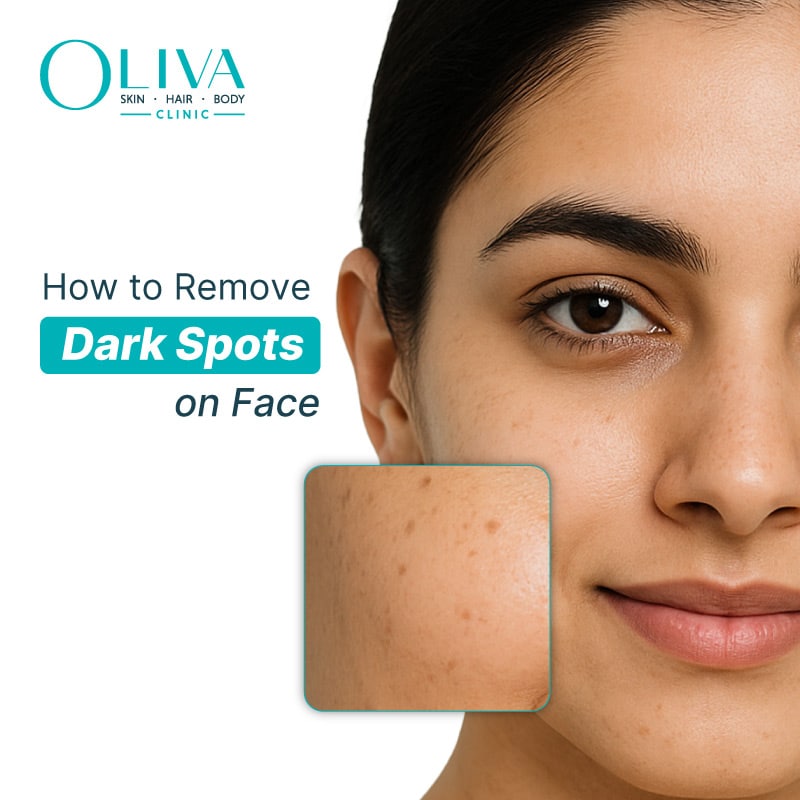
Dark spots medically called hyperpigmentation happen when certain areas of skin produce more melanin than usual. Melanin is the pigment that gives your skin its colour. When melanin production goes into overdrive in a specific spot, that area turns darker than the skin around it. Dark spots are flat, painless, and range in colour from light brown to deep black depending on your skin tone. They are not harmful on their own, but they can affect your confidence and appearance which is why millions of people seek hyperpigmentation treatment every year.
What Causes Dark Spots on Face?
There is rarely just one cause. Dark spots are triggered by a combination of internal and external factors. Here are the most common causes:
-
Sun Exposure (UV Damage):
This is the leading cause. UV rays from the sun stimulate melanocytes (melanin-producing cells) to overproduce pigment. Years of unprotected sun exposure lead to sun spots and uneven tone. In India, the harsh climate makes this especially common.
-
Hormonal Changes (Melasma)
Fluctuations in oestrogen and progesterone during pregnancy, while using oral contraceptives, or around menopause trigger melasma. Melasma causes symmetrical patches on cheeks, forehead, and upper lip. It is more common in women and more visible in darker skin tones.
-
Post-Acne Inflammation (PIH)
Every time a pimple heals, it can leave behind a dark mark. This is called Post-Inflammatory Hyperpigmentation (PIH). The inflammation from a breakout triggers excess melanin, causing acne marks that linger for weeks or even months.
-
Ageing
As we age, melanin distribution becomes uneven. Age spots (also called liver spots or solar lentigines) appear on areas frequently exposed to the sun the face, hands, and shoulders.
-
Skin Injuries or Irritation
Cuts, burns, allergic reactions, harsh scrubbing, or wrong skincare products can all cause inflammation that leads to dark patches.
-
Medications
Some medicines including certain antibiotics, anti-seizure drugs, and chemotherapy agents can cause drug-induced pigmentation as a side effect.
-
Genetics
Some people are simply more prone to hyperpigmentation due to their genetic makeup and skin type. Fitzpatrick Skin Types IV–VI (common in South Asians) are more melanin-rich and therefore more susceptible.
Types of Dark Spots on Face
Not all dark spots are the same. Identifying the type helps determine the best treatment:
| Type of Dark Spot | Main Cause | Common Location |
| Melasma | Hormonal changes, sun exposure | Cheeks, forehead, upper lip |
| Sun Spots (Lentigines) | UV radiation damage | Cheeks, nose, shoulders |
| Post-Acne Marks (PIH) | Inflammation after pimples | Anywhere acne occurred |
| Freckles | Genetics + UV exposure | Nose, cheeks (fair skin) |
| Age Spots | Cumulative sun damage over years | Face, hands, arms |
| Drug-induced Pigmentation | Certain medications (e.g., minocycline) | Face, forearms |
Clinical insight:
In India, melasma and PIH (post-acne marks) are the two most frequently treated pigmentation conditions. South Asian skin is melanin-rich, which means it responds more intensely to triggers like sun and inflammation but it also responds very well to targeted treatments when done correctly.
How to Remove Dark Spots on Face
The approach to remove dark spots depends on the cause, depth, and your skin type. There are two broad categories: home-based solutions and clinical treatments.
Ingredients That Actually Work
While ingridents cannot replace clinical treatments, some evidence-backed ingredients can mildly reduce superficial pigmentation over time:
A potent antioxidant that inhibits melanin production. Use a stabilised L-ascorbic acid serum (10–20%) every morning under SPF.
-
Niacinamide (Vitamin B3)
Reduces melanin transfer to skin cells and improves overall skin tone. Well-tolerated even on sensitive skin. Ideal for PIH.
-
Alpha Arbutin
Derived from bearberry plants, it blocks tyrosinase the enzyme that triggers melanin. A gentler alternative to hydroquinone.
-
Kojic Acid
Found in some brightening creams, kojic acid is a natural melanin inhibitor used widely in Indian skincare products.
-
SPF 50+ Sunscreen
Non-negotiable. Without daily sunscreen, no treatment will work long-term. UV exposure will undo every effort within weeks. Important Over-the-counter remedies can take 3–6 months to show mild results. For stubborn, deep, or widespread pigmentation, you need professional treatment.
Best Dermatological Treatments for Dark Spots
Clinical pigmentation treatments are faster, more effective, and customised to your skin. Here is what dermatologists commonly recommend:
-
Prescription Topical Agents
Dermatologists may prescribe a combination of hydroquinone (2–4%), tretinoin, and corticosteroids known as triple combination therapy. This is one of the most effective first-line melasma treatments, especially for Indian skin.
-
Chemical Peels
A controlled solution (glycolic acid, salicylic acid, lactic acid, or TCA) is applied to exfoliate the top layers of skin, removing pigmented cells and stimulating new cell growth. Chemical peels work well for PIH, sun spots, and mild melasma. Results are visible in 2–4 sessions.
-
Laser Treatment for Pigmentation
Lasers like Q-switched Nd:YAG, Pico Laser, or Fractional CO2 target melanin pigment directly without damaging surrounding skin. Laser therapy is highly effective for stubborn age spots, deep pigmentation, and melasma. It is the gold standard for how to remove dark spots quickly.
-
Intense Pulsed Light (IPL)
IPL delivers broad-spectrum light to break down pigmentation. It works well for sun spots and diffuse pigmentation across larger areas of the face.
-
Microneedling with Serums
Tiny needles create micro-channels in skin, allowing brightening serums (like vitamin C or tranexamic acid) to penetrate deeper. This boosts their efficacy significantly.
-
Glutathione IV Therapy
Popular in India, this intravenous treatment works systemically to reduce melanin production. It is used for overall skin brightening, especially in deeper Fitzpatrick skin types.

Pro Tip from Dermatologists
Combination therapy for example, a Q-switched laser paired with a prescription topical cream and daily SPF consistently produces the best results. No single treatment works in isolation. Always follow your dermatologist’s protocol for safe and lasting results on Indian skin tones.
Dark Spots & Indian Skin: What You Need to Know
This section is rarely covered on competitor blogs and it matters enormously.
Indian skin (Fitzpatrick Types III–V) has higher baseline melanin. This has real clinical implications:
-
Higher PIH Risk
Any skin inflammation acne, a rash, even a scratch is more likely to leave behind a dark mark in Indian skin compared to lighter skin tones.
-
Aggressive Lasers Can Backfire
Some laser wavelengths used safely on fair skin can cause paradoxical darkening (post-inflammatory hyperpigmentation from the laser itself) on darker skin. Always choose a dermatologist experienced with South Asian skin.
-
Melasma is Deeper
In Indian women, melasma often involves the deeper dermal layer, not just the surface. This requires specific treatment protocols that go beyond standard brightening creams.
-
SPF is Essential Year-Round
With India’s UV Index routinely reaching 10–12+, daily broad-spectrum SPF 50 PA+++ is non-negotiable even on cloudy days and indoors near windows.
Prevention Tips to Avoid Dark Spots
Prevention is always easier than treatment. Here is how to protect your skin:
- Apply broad-spectrum SPF 50+ sunscreen every morning, even indoors. Reapply every 2–3 hours if outdoors.
- Wear protective clothing, hats, and sunglasses when spending time in the sun.
- Treat acne early and gently do not pop pimples, as this worsens inflammation and PIH.
- Avoid harsh scrubbing or abrasive face washes that irritate the skin barrier.
- Use antioxidant-rich skincare (Vitamin C, niacinamide) to neutralise UV-induced free radical damage.
- Stay hydrated and maintain a skin-friendly diet rich in antioxidants (berries, green tea, leafy greens).
- If you are on hormonal medication, ask your doctor about pigmentation risk and discuss alternatives if needed.
When Should You See a Dermatologist?
Not every dark spot needs a clinic visit. But you should see a dermatologist if:
The spot is new and growing rapidly: This warrants ruling out something more serious, like melanoma (though rare).
OTC products have not worked after 3 months: Deeper pigmentation needs prescription-strength treatment.
Your dark spots are widespread or symmetrical: This may indicate melasma, which responds poorly to generic brightening products.
You are pregnant or breastfeeding: Many OTC ingredients are not safe; a dermatologist can prescribe what is.
You want faster, more visible results: clinical treatments deliver results in weeks, not months.
Dermatologists in Hyderabad and across India now offer highly advanced and affordable pigmentation treatment options. A single consultation can save you years of trial and error with ineffective products.
Frequently Asked Questions On Dark Spots On Face
Yes, some superficial dark spots especially mild PIH after acne can fade naturally over 6–12 months as your skin renews itself. However, melasma, sun spots, and deep hyperpigmentation rarely resolve without treatment. Consistent SPF use dramatically speeds up natural fading.
There is no single ‘best’ treatment it depends on the type and depth of your dark spots. For mild PIH: niacinamide + SPF. For melasma: triple combination therapy + laser. For sun spots: IPL or Pico laser. Your dermatologist will recommend the right combination after examining your skin.
With OTC creams and serums: 3–6 months for mild improvement. With prescription creams: 6–12 weeks. With chemical peels: visible results in 2–4 sessions (4–8 weeks). With laser treatment: 1–4 sessions depending on severity, with results visible within days of each session.
Yes when performed by an experienced dermatologist using the right laser type and settings. Q-switched Nd:YAG and Pico lasers are specifically well-suited for South Asian skin tones. Avoid aggressive ablative lasers done by untrained operators, as these can worsen pigmentation on darker skin.
Ingredients like vitamin C, niacinamide, and alpha arbutin can maintain skin brightness and mildly reduce superficial spots. However, for moderate to severe hyperpigmentation especially melasma or long-standing sun damage Ingredients alone are insufficient. Clinical treatment gives faster, more reliable results.
The fastest clinically proven method is Pico laser or Q-switched laser therapy, which can visibly reduce dark spots in 1–3 sessions. Chemical peels are the next fastest option, showing results in 2–4 weeks. Always combine with daily SPF 50 to prevent recurrence.
Yes, especially melasma and sun spots can return without proper maintenance. After treatment, you must use daily SPF 50+, avoid peak sun hours, and follow a dermatologist-recommended skincare routine. Maintenance sessions (every 6–12 months) help keep results long-lasting.
Read This Next